Monthly Archives

July 2011

Cocktails

Drink of the Week: Rock The Boat (Don’t Rock The Boat, Baby)

July 29, 2011

My goodness, New York. You really know how to get us all hot and bothered, now don’t you? I hope folks out there are taking advantage of our previous DOTW entries to keep cool. The Blue Bubbly and the Lemon Basil Julep are certainly a breath of fresh air, a summer breeze with a bit of sauciness – or a lot of sauciness, depending, naturally, on your taste for sauce.

Summer continues; tempered slightly, but unabated. And so our drink this week again offers a refreshing, simple escape, taking advantage of an unusual combination of easily obtained ingredients. Because, you know, summer is hot, and it makes sense to swing a cocktail party that requires fewer shopping stops. Less sweating, more drinking! drinking responsibly!

Bess McGill’s “Rock the Boat” is also excellent reminder of beer’s value as a quality mixer. A great beer can harbor such a complex, intriguing palate – and a great beer cocktail can work with the flavor profile of a finely craft brew to create a unique drinking experience.

Ms. McGill explains that the drink was “inspired by the Brown Betty (via Liqurious) but utilizing ingredients available from a nearby convenience store while staying at the Boggsville Boatel in Far Rockaway (think: camping (no electricity or running water), but on private yachts).”
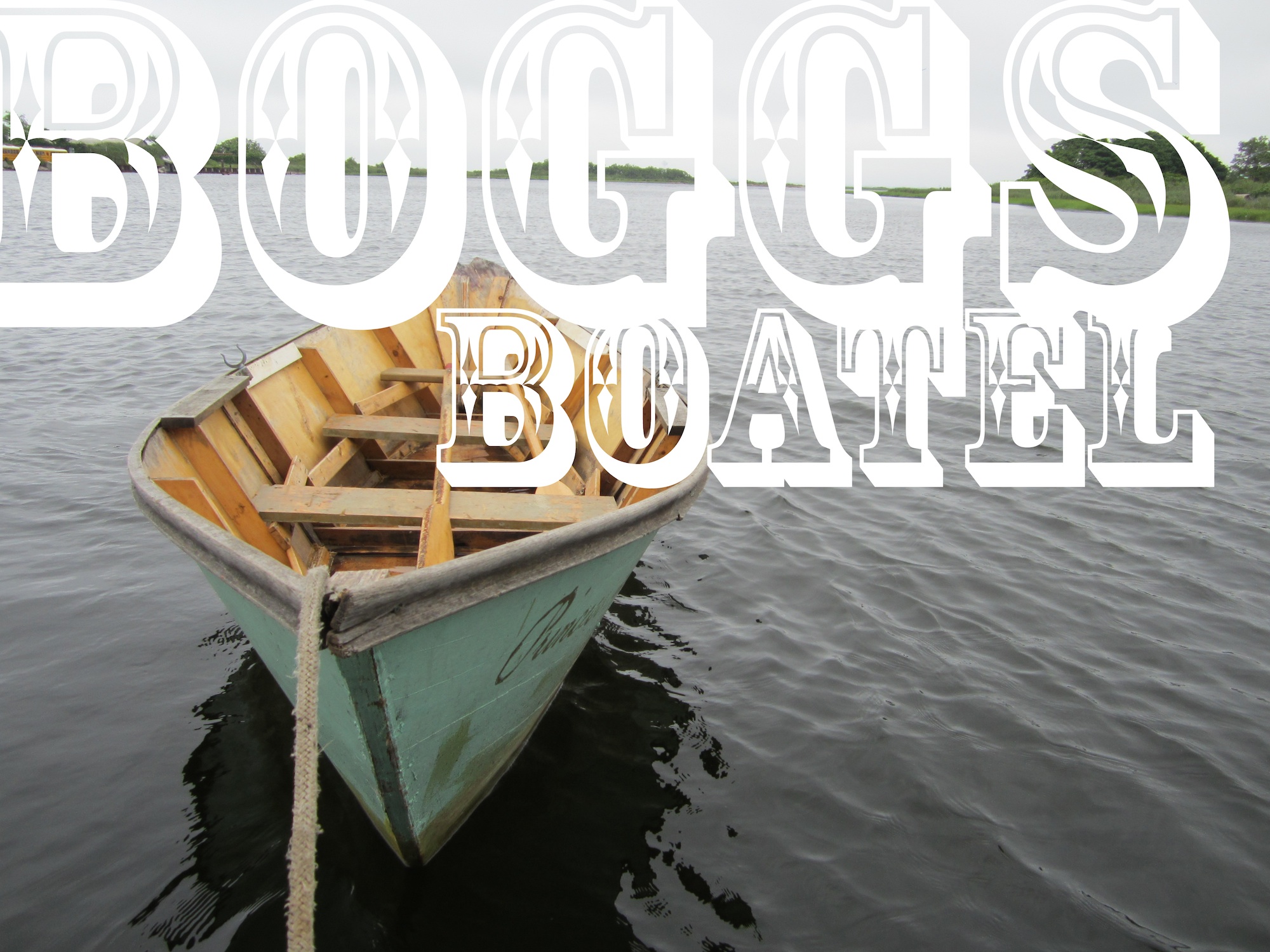
When you’re slumming it up on a private yacht, your drinks have got to be classy, right? Rock away in the Rockaways with the Rock the Boat!

Rock The Boat
-Put a lemon wheel at the bottom of a wide snifter
-Add 1 sugar packet, 2 pinches of allspice/ground ginger
-Pour a splash of cognac on top and swirl until dissolved
-Add an additional 1 oz of VS Cognac
-Pour in 6 oz Newcastle Brown Ale

Enjoy in snifter or pour over ice – the result is like a cold cider. Snifter is optional, though highly recommended.

Our guest mixologist adds the following helpful advice:

When your Sodastream runs out of CO2, or you showed up late to the party and all the seltzer is kicked, consider this – beer is a great mixer for cocktails. If the thought of combining hard alcohol and beer in the same drink rocks your boat [ha! – Ed.] too much, try thinking about flavors of beer like “fermented soda.” Most beers range in 4%-6% ABV (alcohol by volume) – pick beers that are on the lower end of the ABV spectrum. Consider the flavors of the beers too – for example: Newcastle Brown Ale, nutty; Magic Hat #9, peachy; Ballantine XXX, slightly apple.

Once again, we encourage you to experiment and play with the recipe. No ingredient or quantity is set in stone – if you find a delicious combination, let us know!

Many thanks to Bess for sharing her delicious drink with us! Got a cocktail you’d like us to feature? Let us know.

About our mixologist: Bess McGill is a cocktail designer. Presently, she is staffing a newly formed Brooklyn-Based Liquor Manufacturing Plant & Distillery. For more information, contact Bess.McGill@gmail.com.
From the Web

Books

Brooklyn Bugle Book Club: NYRB Books

July 29, 2011

Over the past few years I’ve noticed how many of the great books that have come into the house have been classics reissued by New York Review Books (NYRB Classics). They cover an amazing range, and our household has enjoyed a lot of them, including:

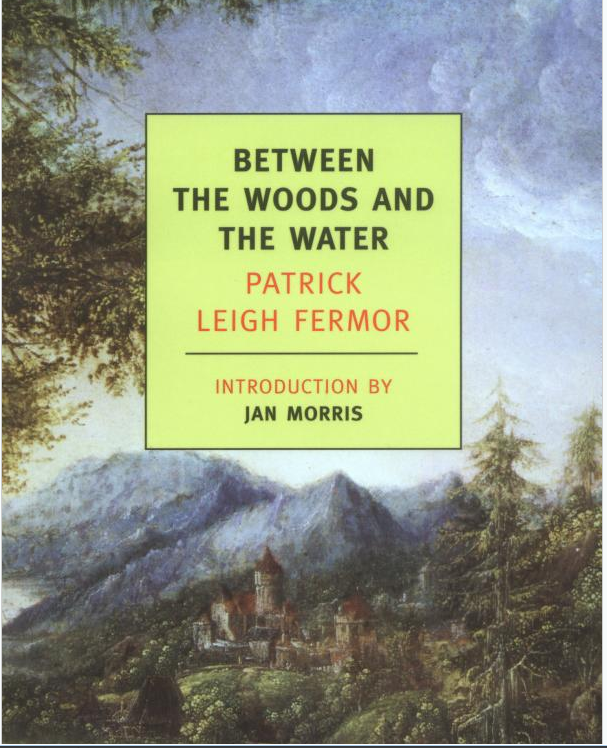
All of Patrick Leigh Fermor’s travel books – A Time of Gifts and Between the Woods and the Water are the best known. In them Patrick Leigh Fermor describes a walking trip across Europe in 1933-35 — he was 18 when he started —  from Rotterdam to Istanbul. The books, especially the second, are lovely; they are also elegiac, because they PLF wrote them years later, with full knowledge of the horrors World War II brought. PLF describes his trip through Romania and Hungary like a long, golden summer afternoon. (Sadly, Leigh Fermore died earlier this year without having completed his description of the final leg of the trip.) But he did publish other travel books. Mani, about the Southern tip of Greece, where Leigh Fermor lived, is also interesting. I just picked up his book about the Caribbean, The Traveller’s Tree.

Names on the Land, by George R. Stewart – A whimsical and fun to read but academically rigorous study of American place names from 1492 (and earlier where possible).

The Snows of Yesteryear and Memoirs of an Anti-Semite, by Gregor von Rezzori. The former a memoir, the latter a novel, of growing up in Central Europe, before and during the Second World War. I hesitate to make the Nabokov comparison, but Nabokov did keep springing to mind, particularly Speak, Memory.

Stoner, by John Williams – If it were written now, the title would mean something else. But it’s just name of the main character, a Midwestern academic in a misalliance worthy of Edith Wharton, if she had written about another part of the country. It’s a memorable book.

The Long Ships, by Frans G. Bengtsson – A tale of Vikings from around the first millenium. Characters travel as far as Constantinople, are enslaved in Spain, convert to Christianity, go on Viking raids, and defend their own farm. Perfect for the beach or a long plane ride.

The Education of a Gardener, by Russell Page – Basic knowledge for gardeners and landscape architects, this one is perhaps not a page-turner, but it will make you look at the gardens around you in a new and thoughtful way. And it’s beautifully illustrated.

I could go on. NYRB always has a booth at the Brooklyn Book Festival, to be held this year on September 15-18, and I always like seeing what they’ve brought. And Court Street Books has a full bookshelf devoted to the press, it’s worth checking out.

Have you read any of these books? Did you like them? Which NYRB books are your favorites? Discuss in the comments.

From the Web

Books

Brooklyn Bugle Book Club: Mary Gordon, “The Love of My Youth”

July 21, 2011

I am generally a fan of Mary Gordon’s fiction, and her new novel “The Love of My Youth,” set in Rome, should have been enchanting. In it, Adam and Miranda, lovers in high school and college, meet again in Rome many years later. They walk and talk and surmise things about each other. The descriptions of Rome are tender and accurate; I particularly loved the description of the market in the Campo dei Fiori. And the descriptions of walking in the Borghese Gardens, as well as the delicious description of Bernini’s Apollo and Daphne in the Borghese Gallery. But the novel left me unsatisfied . . . and it took me a while to figure out why. I couldn’t quite believe in the characters, who we mostly see through their conversations, and I didn’t find their behavior compelling. The conflict between them had been resolved long ago, and their meeting up again after nearly 40 years did not revive it. Nina  Sankovitchwitz, of Readallday.org, thinks the last third of the novel, where the resolution is described, is worth the wait. I found it to be something of a letdown. I thought the story of their college classmate Valerie, who lives in Rome and is the mechanism by which Adam and Miranda reconnect, might have made a more interesting novel – she clearly made some interesting compromises. In their somewhat insensitive way, Adam and Miranda gloss over them. What did you think? Discuss in the comments.

From the Web

Cocktails

Drink of the Week: Ms. Abigail’s Lemon Basil Julep

July 21, 2011

Dear readers: you didn’t think I was going to invent a new cocktail every single week, did you? Indeed, part of the impetus behind this feature is to highlight the barfolk that keep this fine borough in its cups. You may have noticed that many of our spirit-ual friends have absconded this week to the Big Easy for Tales of the Cocktail, making it a perfect time to gather your ingredients and whip up a batch of something delicious in the comfort of your own home. Be sure to tip yourself.

This Drink of the Week is brought to us by Abigail Gullo, whom one finds behind the bar at Fort Defiance [365 Van Brunt St] and at lauded newcomer The Beagle [162 Ave A, Manhattan]. When I asked Abigail for a seasonally appropriate cocktail, she introduced me to her Lemon Basil Julep. It’s divine! Thanks Abigail!

Abigail writes:

In this hot summer heat wave, it’s good to look to the drinks that our Cocktail forefathers turned to before the days of air-conditioning.  You may be filled with visions of fine southern gentlemen and their dainty ladies sipping Juleps on the porch of their plantation, but this drink is rooted in pre-antebellum times and was far more global.  First of all, as a classification, the Julep does not have to have Bourbon in it, nor mint for that matter.  A Julep is all about the construction and perfect melding of sugar, spirit and ice. The Julep is one of the oldest cocktails and in the 1700’s was used for medicinal purposes with all sorts of herbal relief, not just Mint.

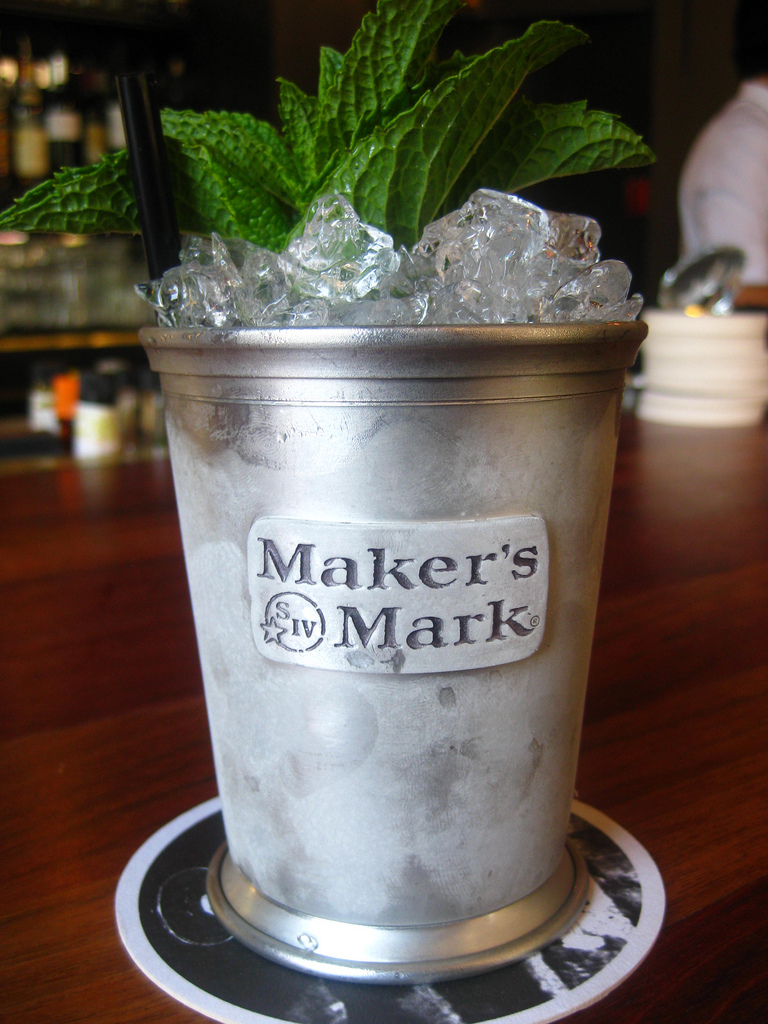
So let’s put a modern twist to this summer chiller and head to the Farmer’s Market for some seasonal herbs.  Lemon Basil, which is now in season, has a crisp, clean, antiseptic quality to it.  It is heartier than regular basil and not as sweet with a verbena-like tang.  With a touch of sweetness from the honey syrup and a peppery bite from the Rye Whiskey, this frosty sipper certainly seems like just what the doctor would order on a sweltering day.  The metal Julep cup is a must here to create that nice frost on the cup.  If you don’t have a silver Julep cup, the small part of a metal cocktail shaker will do in a pinch.

The Lemon Basil Julep

2 oz Rye Whiskey (I like Rittenhouse 100 proof)
1/2 oz Honey Syrup*
Large sprigs of Lemon Basil
Crushed or shaved ice


Gently muddle about 7-8 leaves of lemon basil in the bottom of your julep cup with the honey syrup.  Add the Rye and a scoop of crushed ice. Stir until a frost forms on the outside of the julep cup.  Top with a big mound of snowy crushed ice and a big sprig of Lemon Basil.  Insert a straw cut short so your face is in the basil every time you take a sip.  Sit back on the porch and sip the summer away.

*To make honey syrup, mix equal parts honey and hot water until the honey pours freely.

Flickr Photo by Cunning Stunt

About the Contributor

Abigail Deirdre Gullo first fell in bartending when she learned to make a Manhattan (sweet) for her beloved Grandfather.  Abigail started her blog, RyeGirl, in 2005 with the intention of having a forum for her experiments in mixing and to honor her favorite spirit.  After leaving her teaching job (a profession that will drive any single gal to drink) she devoted herself full time to the industry of fine spirits and cocktails. Abigail is a proud member of LUPEC NY (Ladies United for the Preservation of the Endangered Cocktail). Her Margarita won People’s Choice at the 2010 Tales of the Cocktail, and her cocktails have been featured in The New York Times and In The Mix magazine.  You can currently visit her behind the stick at Fort Defiance in Brooklyn, The Beagle in the East Village, behind the mic at Live Band Karaoke, or behind her computer screen blogging at ryegirlnyc.blogspot.com.

Got a hot cocktail that deserves to be our Drink of the Week? Let us know!

From the Web

Events, Kids

Support CAMBA at a Brooklyn Cyclones Game!

July 20, 2011

Do you love baseball and helping other people and feeling good about yourself, all at the same time?

Then we’ve got the event for you.

CAMBA, a non-profit agency that provides services to enhance the lives of Brooklyn’s neediest residents, is selling tickets to the Brooklyn Cyclones game on Thursday, July 28, at 7PM at MCU Park. The price for each ticket is $50, and includes not only entrance to the park and a sweet seat for the game, but also a voucher for a hot dog, chips, and a soft drink. And in case that’s not enough, you’ll also get a Brooklyn Cyclones cap, so that you can always display your fierce borough pride! Continue Reading…

From the Web

Life

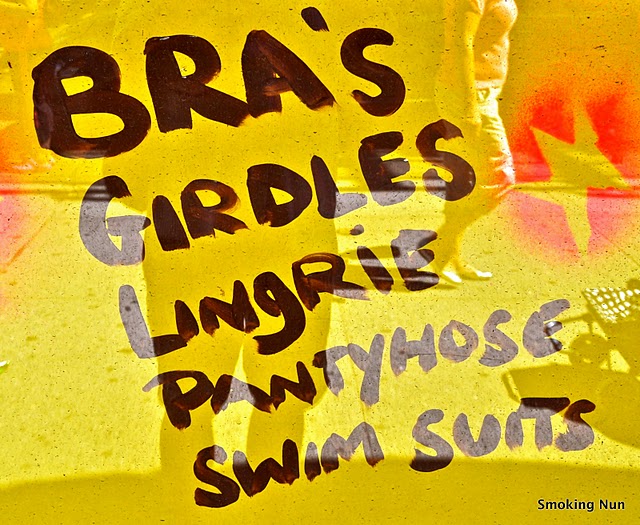
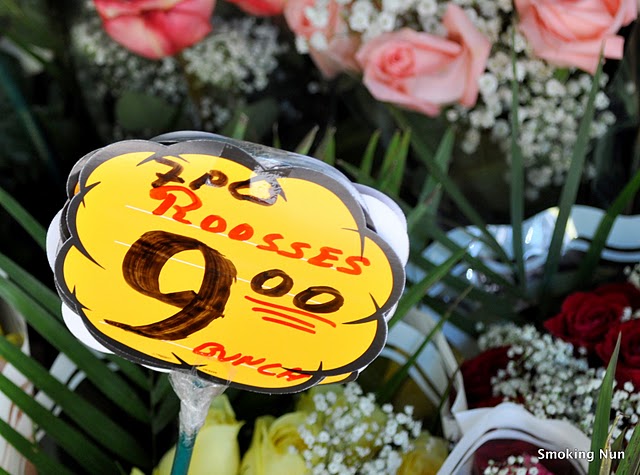
Coney Island: A Cataclysmic Tidal Wave Of Spelling Gaffes

July 20, 2011

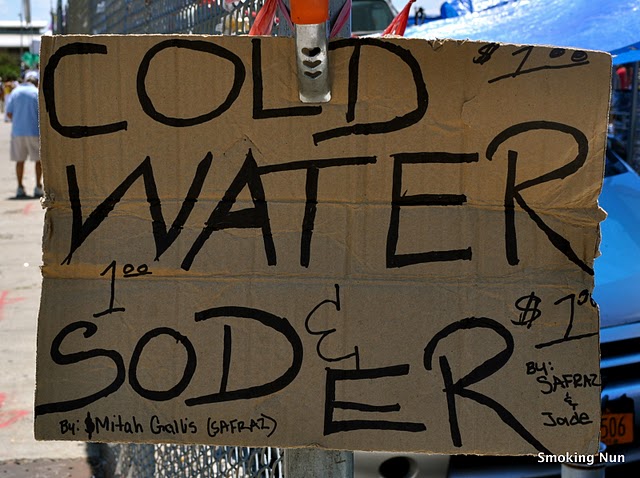
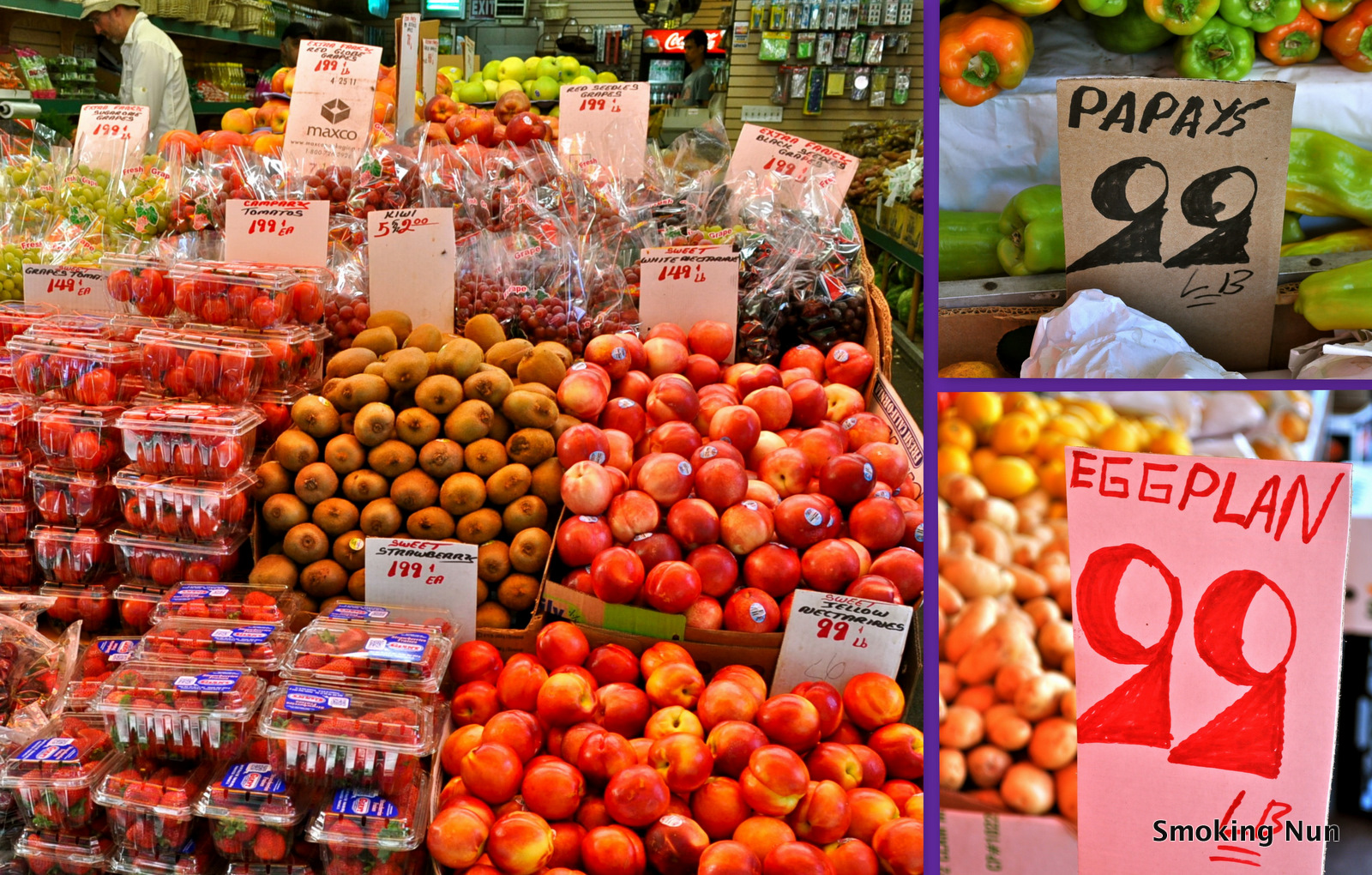
Spelling errors in our nation’s major newspapers are a dime a dozen anymore… not so funny. Wandering through Coney Island and Brighton Beach last weekend—where English, admittedly, may not be a first language—and seeing creative spelling all around… pretty damn funny.

Check out these photos!

From the Web

Books

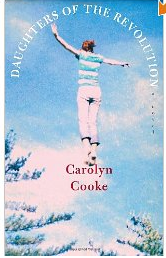
Brooklyn Bugle Book Club: Revolutionary School – Daughters of the Revolution by Carolyn Cooke

July 15, 2011

Carolyn Cooke’s novel, “Daughters of the Revolution,” is a curious book, in all good senses of the word. The novel covers the years 1963-2005 at the Goode School and its surrounding town. Several revolutions—the sexual revolution, the quieter, smaller but still potent revolution that resulted in first, African-Americans, then girls, then African-American girls being admitted and eventually becoming valued—provide the events, and the subtext, of the novel. “Daughters of the Revolution” more or less describes events in the lives of the Headmaster Goddard Boyd, known familiarly as “God,” and a few other alumni, staff, spouses, and children connected to the school. And to each other.

The school itself, though its influence is deeply felt, never actually takes form. It floats mistily off the shore of Cape Wilde, the mythical North Shore town where much of the novel takes place. This is not The Rector of Justin. I found it potent stuff, though I’m aware that some readers might find it obvious. (The “Goode” School. Really?) What do you think? Which revolutions did you live through? Did Carolyn Cooke capture them? Share your impressions in the comments.

(Note: Updated August 25, 2011)

From the Web

Cocktails

Inaugural Drink of the Week: The Blue Bubbly

July 12, 2011

Is there a better way to celebrate summer than with a delicious, refreshing cocktail? Answer: no. No, there is not. So let’s celebrate! Welcome to The Bugle’s new weekly featurette: The Drink of the Week! Our DOTW selections will feature fresh, seasonal ingredients melded into intriguing concoctions developed by some of the brightest boozy Brooklynites. Got a beverage worth sharing? Let us know!

I was planning on surveying all my talented bartender friends to see what they’re drinking this summer and then sharing their best with you. But at a pig roast upstate this weekend, I was faced with a mish-mash party bar and managed to put together something wonderful. So this week, the drink is provided free of charge by your friendly author!

your friendly author.

For us service professionals, it’s easy to get used to our spot behind a fully-stocked bar – gobs of fresh fruit, ample liqueurs, an array of mixers. The party bar is rarely so generously appointed – but the subsequent improvisational creative process can produce inspired results. Evidence: The Blue Bubbly. It’s a champagne float variation, with an emphasis on tart and sour. Seriously, folks: this drink is face-meltingly delicious. Don’t be scared by the blueberry vodka – it’s much more subtle and not nearly as cloyingly sweet and obnoxious as many flavored vodkas. For extra smoothness and class, add a more luxurious triple sec like Cointreau or Grand Marnier, and instead of Rose’s, make your own fresh sour mix. The lemon-lime soda is a product of the partial bar – it can be replaced with any number of sodas, ades, or juices. Got some other interesting ingredients on hand? Experiment and enjoy!

The Blue Bubbly

2 oz Smirnoff Blueberry Flavored Vodka
1/2 oz Triple Sec
1/4 oz Rose’s Lime Juice
Lemon-Lime Soda (Sprite, 7UP, etc.)
Champagne (Any sparkling white wine is just fine)
Fresh Blueberries
Fresh Lime

Serve in tall glass (Collins)

Muddle a medium size handful of blueberries and two lime wedges at the bottom of a shaker. Add vodka, triple sec and Rose’s. Fill with ice. Shake vigorously. Pour into serving glass. Add soda, leaving an inch at the top of the glass. Fill to top with champagne. Garnish with lime, and/or blueberries on a toothpick if you’re feeling especially saucy. Drink. Breathe. Relax. Enjoy your summer.

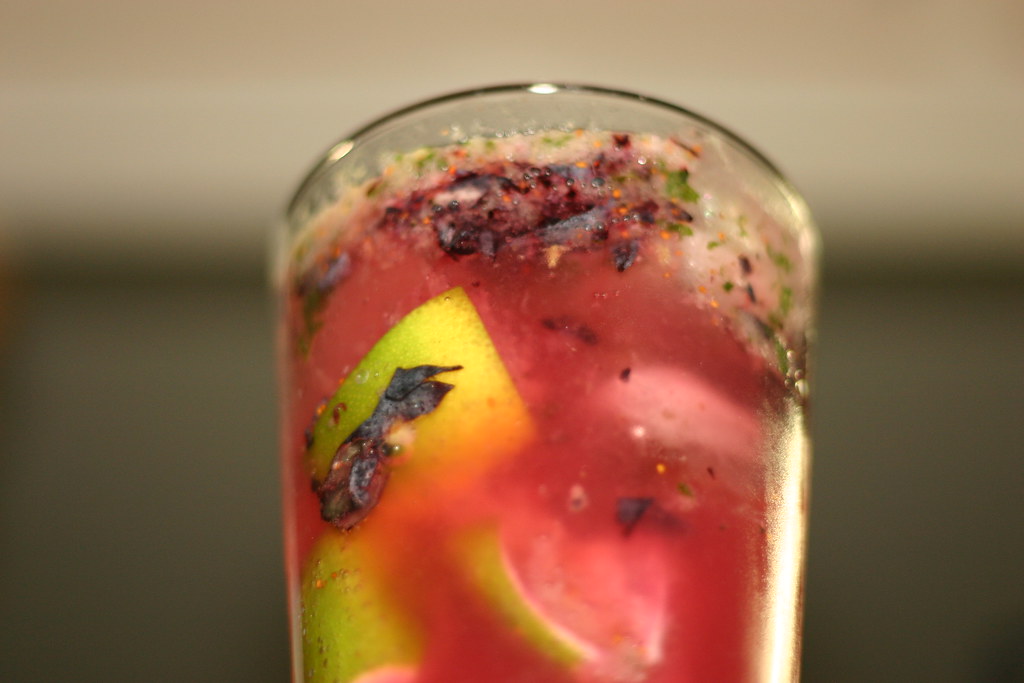
Flickr Photo by ReeseCLloyd

From the Web

Books

Brooklyn Bugle Book Club: Christianity The First 3000 Years by Diarmaid MacCulloch

July 9, 2011

Back in 2003 Diarmaid MacCulloch, an Oxford don, published a magisterial book called The Reformation: A History. That book weighed in at 687 pages of text, every one of them a model of clarity, but, as MacCulloch explains in the introduction to the new book, it raised more questions for him. Now the American edition of his subsequent book, Christianity: The First 3000 Years, written to answer those questions, has made its way into the house. As you can see, this one is even longer. Continue Reading…

From the Web

History, Real Estate

How Do Today’s Brownstoners Compare to Beau Bridges “Landlord” of 1970?

July 5, 2011

Beau Bridges bright eyed character pontificates in The Landlord

Back in May, BAMcinématek featured Hal Ashby’s 1970 film The Landlord starring Beau Bridges as a rich kid who buys a brownston in the “slum” of Park Slope and plans to make it his bachelor pad. That is, after he evicts the current, all black, residents.  In an early scene,  Bridges’ character Elgar, has his hubcaps stolen and is chased down the block by  those angry tenants who just want him to go away.  But like many films from the era, it’s Bridges’ central character who undergoes a transformation, eventually identifying  more with “others” he set out to displace.


WNYC interviewed Mike Woram, the current owner of 51 Prospect Place where the film was set. Back in 1970, the building was falling apart, there wasn’t a tree to be found anywhere and the block was dicey.  All that’s changed now:

Forty years later, the predominantly black, working-class block depicted in the movie is almost unrecognizable. Serrell was one of the first to plant the trees that now tower over the block in every direction — a far cry from the bare, sun-drenched streetscape portrayed in “The Landlord.”

While a handful of longtime black residents remain, Woram says the newest gentrifiers are ironically more like the farcical character of Elgar — whiter and richer — than before.

“We get to live like rich people without being rich people,” he said.  “I don’t know how people buy these things today — it’s nuts!”

Not that the current landlord of 51 Prospect Place is complaining.  Woram says he prefers the Park Slope of the present, except for one thing.

“It seems to be the hardest block in all of this area to get a parking space on.”

The counter-culture Elgar for the most part appears to be typical of the Brownstoners from that era discussed in Suleiman Osman’s The Invention of Brownstone Brooklyn. The author tells Dwell:

Brownstoners who moved to Brooklyn were influenced by the counterculture, environmentalist movements, New Left, etc. Along with cheap real estate, brownstoners looked to the deindustrializing center city as a site of authenticity in an increasingly technocratic society. As opposed to postwar suburbia which they viewed as mass-produced and filled with men in grey flannel suits, they saw the belt of 19th century housing surrounding the central business district as organic, rooted, real, “neighborhoody,” etc.

How do you think the Brownstoner “movement” has progressed from being the domain of bohemians and dreamers 50 years ago? Are some of the Brownstone Belt’s residents clinging to a similar dream of a Utopian Brooklyn when they fight against projects like Atlantic Yards or are they the thin line between civil responsibility and untethered greed? Or is the new guard more apt to desire their own McBrownstones and push the landmark restrictions their predecessors fought dearly for to the limit?

Discuss!

From the Web