Monthly Archives

October 2011

Books

Brooklyn Bugle Book Club: “The House in France” by Gully Wells

October 27, 2011

A beautiful and witty mother, a famous stepfather, literary gossip, and a sparkling style: Gully Wells’ delightful memoir has it all, along with the eponymous house.

Hers was an exciting family to grow up in. Wells’ mother Dee was a journalist who eventually wrote a best-selling novel. Wells’ parents divorced after only five years of marriage when she was quite young, and she lived with her American mother in London, spending several weeks each summer traveling with her father, an American diplomat. Her mother, a journalist, had many suitors, and eventually married the philosopher A.J. Ayer. Wells adored her step-father, though she is clear-sighted enough to agree with her mother’s description of him as an Aspergian with all the sense for the feelings of others of a snail.

It was not an easy marriage; Ayer commuted up to Oxford during the week and lived with Dee in London on weekends. Dee and Ayres produced a half-brother for Wells early on in the marriage. Ayer required a lot of maintenance, and together they enjoyed an active social life among literary and social London. Wells shared it for a long time, and describes many delicious aspects. But Wells also outlines her mother’s family history of mental illness, suggesting that her mother may have inherited a tendency towards less than optimal functioning. The house in France provided some summer grounding for the family after the busy London life of work and school. But the relationship between Ayer and Dee was tempestuous–both took lovers, and Dee’s tongue and temper sound hellish—and eventually the two divorced, though for a while they shared their old house with their new partners.

There was a lot of fallout, emotional and drug-related and medical, and a lot of neglect, particularly of Wells’ brother (Wells was at university by the time the marriage ended). It’s there between the lines of this memoir. But the joy in life, the delight in conversation with friends over good food and wine, along with the excesses (it was the 60s, after all) make for an entertaining excursion into a world now gone.

Some reviewers have allowed that they are jealous of Gully Wells’ glamorous upbringing. Do you agree? Discuss in the comments.

Have a book you want me to know about? Email me at asbowie@gmail.com. I also blog about metrics at asbowie.blogspot.com.
From the Web

Books

Brooklyn Bugle Book Club: “Bedbugs” by Ben H. Winters

October 21, 2011

We normally think of Brooklyn Heights as an idyllic haven from the challenges of New York City life, tucked away as we are in a corner between hip Williamsburgh and staid Manhattan. And that’s what Alex, a photographer, and Susan, a recovering lawyer who would rather be an artist, the main characters in Ben H. Winters’ entertaining new novel, think when they move with their three-year-old daughter to a lovely duplex on Cranberry Street. They spend time skittering around the beautiful tree-lined neighborhood streets, crawling through all the playgrounds, and sampling local restaurants. They are itching to know their new neighbors, most notably the landlady, Andrea, and her handyman, Louis.

But things are not quite what they seem. Susan becomes convinced that the dream apartment harbors bedbugs. Her skin becomes cracked and infected, while Alex and their daughter remain untouched. An exterminator finds no sign of infestation. Susan tries to solve the problem herself,  sending out sticky probes to the previous tenants and lurking on bedbugs websites. Understandably, Alex thinks Susan has lost her mind.

“Bedbugs” is a gothic novel (among Winters’ previous work is the novel “Sense and Sensibility and Sea Monsters”) convincingly moved to our time and our neighborhood. It has a refreshingly modern take and while I can’t give away the outcome the story had me in its pincers start to finish.

I couldn’t read this book before going to bed! Would you? Use the comments to let us know what you think.

From the Web

Food

Oy Vey! GQ Declares Brooklyn “The Coolest City on the Planet”

October 21, 2011

Cripes, where do we begin with this one?

GQ Magazine has declared Brooklyn “The Coolest City on the Planet.” This, apparently is due mostly to our culinary offerings. Yeah, with places like Spumoni Gardens, La Bagel Delight and Junior’s this is a slam dunk, no?

No. We’re talking places like the Chef’s Table at Brooklyn Fare a place you gotta reserve a seat at SIX WEEKS IN ADVANCE.

Well, maybe we’re being too hard on the joint. What’s GQ’s fancy food writer Alan Richman have to say about it:

The Chef’s Table at Brooklyn Fare is, in Michelin’s words, “worth a detour.” In luxury, intimacy, and decadence, it is nearly unsurpassed. Sure, you’ll sit on unpadded bar chairs, but that’s Brooklyn, now so confident of its dining appeal it offers a destination restaurant that isn’t easy on the ass. The food is almost entirely seafood, the expensive kind, like madai, Japanese snapper from the Tsukiji fish market. Le Bernardin, I’ll bet, has taken notice. There’s a sommelier—a sommelier!—from Per Se. Chef César Ramirez stands before you, sending out as many as thirty small courses, all exquisite. That makes him the only celebrated New York chef not in the sushi business who personally prepares every dish for every guest. Ramirez lives in Brooklyn. His business partner runs a grocery down the block. The restaurant is all Brooklyn, with limitations—you wouldn’t want him trolling for seafood in the Gowanus Canal.

Ooooofah! That didn’t help much. But their roundup of Brooklyn’s other great eateries makes things a little better. If only for the mention of Lucali’s:

The longest five days in recent Brooklyn history? When Lucali shut down after owner Mark Iacono got stabbed in the gut by a reputed mobster. He was soon back at the oven, turning out the blistered-crust pies that led GQ’s Alan Richman to name Lucali’s the second-best pizza in America.

Mob beef? Great pizza? Whew! That’s our Brooklyn!

From the Web

Music

Brooklyn Bugle Sessions: We Are Augustines

October 21, 2011

Our latest session features Brooklyn based We Are Augustines.

Billy McCarthy and Eric Sanderson formerly of the critically acclaimed Pela formed the group with drummer Rob Allen. Their debut album Rise Ye Sunken Ships was released in June. The collection chronicles the emotions and challenges faced by McCarthy over a year where he lost his mother as well as his brother James. In our interview, he tells the story of how his James’ struggle with schizophrenia led him deeper into the complicated web of the criminal justice system.

McCarthy also discusses working with Emmy Award winning director Matt Mills on their video for “Chapel Song”.

The band is playing several CMJ 2011 showcases this week before heading out to the U.K. to support Glasvegas on their tour.

Also out this week is the video for the band’s next single, “Book of James” which tells the story of McCarthy’s brother.

From the Web

Music

Catch The Kin and other Brooklyn Bugle Sessions Bands This Week at #CMJ2011

October 17, 2011

The CMJ Music Marathon is this week and while other folks are racking their brains about which bands to see, we here in the Brooklyn Bugle newsroom have it all figured out. You see, we’ve already featured many of the best artists playing this week’s fest in our Brooklyn Bugle Sessions.

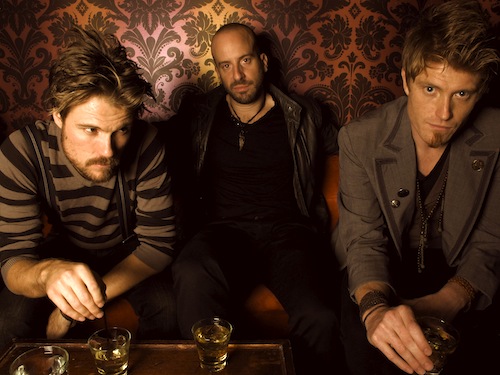
First up – The Kin. The NYC based trio featuring Aussie brothers Thorald and Isaac Koren along with percussionist/legend Shakerleg (he’s Kanai Dutta meets Buddy Rich while channeling Animal) have the distinction of being our most viewed Brooklyn Bugle Session.

The band have also been generating quite a buzz recently. Along with We Are Augustines, they made the NY Daily News’ list of 15 Bands to See at CMJ 2011. Last week, Thorald and Isaac staged Dinner with Thieves, part dinner theater and part showcase at Australian restaurant Kingswood in Manhattan.

Bon Appetite writes about the experience:

Guests, who had signed up in advance, were told to order a special drink at the bar, at which point they got a packet of papers with a warning not to open and to await further instructions scrawled on the outside. It may have been the drink working its magic, but by the time the band burst in from the back stairs, angrily strummed an acoustic guitar, and demanded that its hostages march down to the basement (or else), I was actually down for some musical spectacle (rare for one as grumpy as I).

And they did not disappoint! No pyrotechnics, since that’s usually a bad idea in basements, but during and between courses, the band managed to happily distract me from the serious business of eating with an interesting mix of storytelling and songs. Their music, driven by acoustic guitar and two-part harmonies, fit the intimate space well, and they didn’t even make us help solve a murder mystery.

Also in attendance at the dinner, legendary producer Tony Visconti best known for his work with David Bowie and T-Rex. Seems that he’s got a thing for gifted musicians with a theatrical side – he’ll be producing The Kin’s new album. Not only that but Visconti, who regularly took bands to his mother’s Brooklyn home for dinner must also appreciate the fact that the Koren boys feature their mother in their performance piece.

The Kin

The Kin perform at Rockwood Music Hall Saturday (10/22). Details here.

One of our favorite sessions was with John Michael Rouchell aka MyNameisJohnMichael. The New Orleans based singer-songwriter usually appears with his full band – featuring a brass section – but his stripped down performance here will have you thinking about Tom Waits or Tim Buckley in their heyday. MyNameisJohnMichael perform at the Living Room on Friday (10/21). Details here.

Locksley lit up our studio with a performance of their hit “The Whip” as well as a Bob Marley cover song. They’ll be playing CMJ 2011 Wednesday (10/19) at the Rockwood Music Hall. Details here.

Brooklyn Bugle Sessions: We Are Augustines from The Brooklyn Bugle on Vimeo.

Last but certainly not least is We Are Augustines. Our interview and other music from the band will be posted later this week but we couldn’t hold back on sharing their performance of “Strange Days” with you right now. They’ll be performing Wednesday (10/19) at the Ace Hotel. Details here.

Are you hitting CMJ this year? Who are you seeing? Comment below!

From the Web

Books, Existential Stuff, Health

Brooklyn Bugle Book Club: “fathermothergod” by Lucia Greenhouse

October 14, 2011

Like other kids growing up in suburban Minnesota, Lucia Greenhouse loved her parents, and was lucky enough to grow up near an extended family of grandparents, aunts, uncles, and many cousins. Unlike many other kids and all of her cousins, Greenhouse was brought up by parents who had converted to Christian Science during her childhood, fortunately, she points out, after Greenhouse and her two siblings were old enough to be vaccinated. As Greenhouse describes it in her new memoir fathermothergod: My Journey out of Christian Science, all three suffered through the chicken pox with untreated symptoms.

Greenhouse’s father became a Christian Science Practitioner while she was growing up, and the family moved away from Minnesota, first to London, and later to New Jersey. The children were placed in Christian Science boarding schools. Greenhouse leaves most of the theology of Christian Science obscure, outlining it only with respect to medical care. As she explains it, Christian Scientists don’t treat sickness using modern medicine, believing that we are made in God’s image and likeness and are spiritual, not material, beings. And therefore can’t be sick. Greenhouse meditates on various statements from Mary Baker Eddy’s book Science and Health with Key to the Scriptures and then keeps finding herself tied in logical knots because of them (including, for example, the problems death poses Christian Science).

Many illnesses cure themselves with time. But some diseases don’t get better: untreated, they get worse. This clear-sighted memoir describes Greenhouse’s mother’s decision to use Christian Science to treat what turns out to be an abdominal cancer. The suffering wasn’t limited to Greenhouse’s mother. As Greenhouse describes it, Christian Science Practitioners use prayer and urge good thoughts to help adherents overcome illness (though they don’t use that word). They also, according to Greenhouse, shun doubters, whose negative thoughts might induce ‘mental malpractice’, and Greenhouse and her siblings were kept away from their mother for months during her illness. And because family members may object to the rejection of modern medical treatment, Christian Scientists don’t talk about even obvious illness, insisting that nothing is wrong. Greenhouse and her siblings were forbidden to discuss their mother with their grandparents, aunts, and uncles.

Greenhouse illustrates the pernicious effect the demand for secrecy has on family life. Several generations of her large family were cut off from each other during her mother’s stay at a Christian Science nursing home, and Greenhouse’s extended family didn’t learn about the illness until nearly its end. Greenhouse’s description of coming to terms with her mother’s illness, its treatment, and all the many consequences including vast troughs of anger, fear, and guilt, make for a moving and compelling story.

I can’t say this is an easy book to read because the pain that Greenhouse and her family experienced is rendered so palpably, but I urge you to read it because the lessons about secrecy Greenhouse ultimately draws are universal. Do you agree or disagree? Let us know in the comments.

Have a book you want me to know about? Email me at asbowie@gmail.com.

From the Web

Existential Stuff, Music

Rage Against the Machine: Tom Morello at #OccupyWallStreet

October 13, 2011

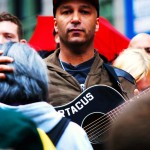
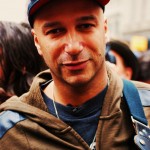
Brooklyn Bugle contributor Tim Schreier caught Tom Morello’s set today at #OccupyWallStreet at Liberty Plaza’s Zuccotti Park.  The singer-songwriter performed on the eve of the protesters’ potential eviction from their campground.

Morello, a long time supporter of progressive causes, is currently promoting his latest Nightwatchman release World Wide Rebel Songs. He was joined by frequent collaborator Carl Restivo.

Rolling Stone: Tom Morello paused for a moment as he tuned his guitar in front of the Occupy Wall Street masses this morning at New York’s Liberty Plaza. “This is crazy out here,” he said, smiling. The Rage Against the Machine guitarist went on to perform a four-song set for hundreds of onlookers, including a poignant, protester-fueled rendition of Woody Guthrie’s “This Land Is Your Land.”

Before the performance, however, Morello addressed the crowd – whom he called “friends.” He introduced himself as the Nightwatchman, his folk alter-ego, and spoke directly to the attentive and excited members of the Occupy Wall Street movement: “First, they ignored you – then you got pepper-sprayed.” But he didn’t stop there. Morello led the crowd in a charged chant: “I know in my heart, all hell can’t stop us now.” And then, repeatedly, “All hell can’t stop us now!”

From the Web

Arts and Entertainment

Restaurant Workers Deliver a Creative Banquet to Urban Folk Art Gallery

October 12, 2011

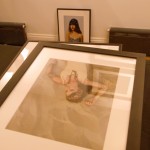
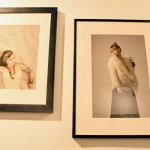
Visitors packed into the Urban Folk Art Gallery on Friday night to feast their eyes on a visual banquet served up by creative talents from the eateries and bars along Brooklyn’s Restaurant Row (aka Smith Street) at the opening party for the “Guest Check” collective exhibition.

“I think it’s great that businesses on this street came together to support the people who serve the community,” said attendee Betsy Wise. A sales associate at the nearby Soula shoe store, Wise stopped by to congratulate her friend Danielle Onesto, one of the 11 artists featured in the show.

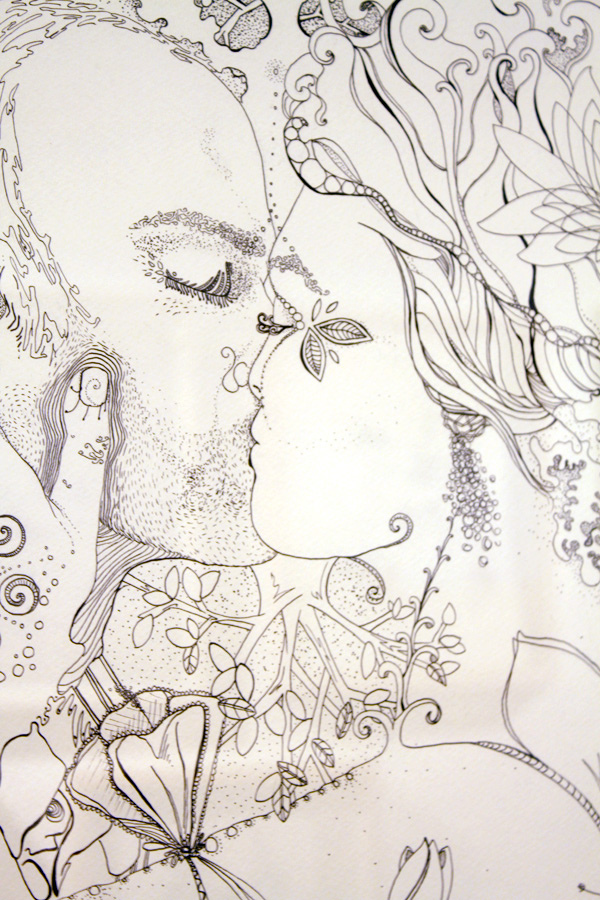
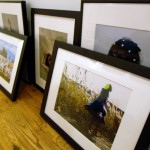
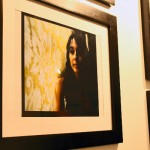
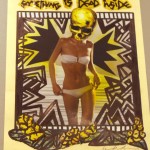
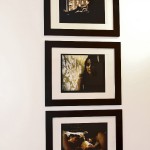
Portrait by Danielle Onesto

Onesto, who was celebrating both her birthday and her first public exhibition, said she had never shown in a gallery before because her work is so personal to her. But when a colleague at Robin des Bois mentioned that “Guest Check” would be focused solely on artists who also work on Restaurant Row, Onesto was intrigued enough to show Urban Folk Art Gallery co-owner/co-curator Adam Suerte her ethereal portraits that were selected for the exhibition.

“It’s nice to see people who make art and are supporting themselves by doing the dirty work,” said Onesto, who holds a Master’s degree in art education from Pratt Institute. “Waiting tables and making drinks is how we get by. I’ve worked in restaurants for eight years and everybody is creative.”

Indeed, the pieces on display in “Guest Check” represent an impressive array of artistic talents, whose work encompasses a broad range of mediums.

“When Adam (Suerte) opened the gallery, we started brainstorming and we thought this exhibition would be a great introduction to the talent that works on Smith Street,” said co-curator Robert Bonhomme. Now an established tattoo artist at the adjacent Brooklyn Tattoo shop that Suerte co-owns, Bonhomme previously worked in the service industry as a bartender and manager for 11 years, during which time he organized exhibitions similar to “Guest Check” in Portland, Oregon. By bringing this same concept to the Urban Folk Art Gallery, Bonhomme opened up the opportunity for him and Suerte to delve into the well of creativity located just outside their door.

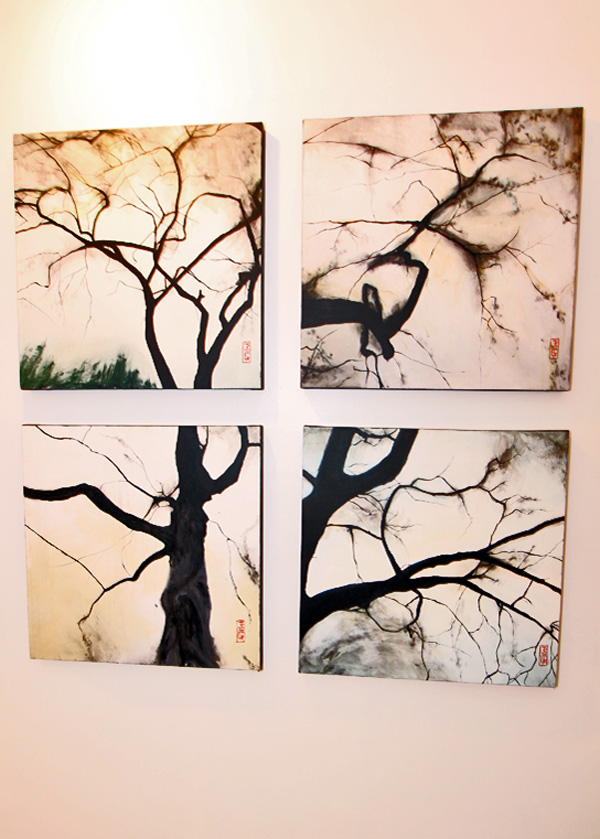
“They’re right across the street,” noted Pacifico bartender Jarett Gibson, whose acrylic paintings of hauntingly beautiful, bare-limbed trees are included in the exhibition. “After they’re done working, they come over here and have a bite to eat, so I got to know them that way. It’s this symbiotic relationship that I think has really helped to bring a lot of people together.”

Paintings by Jarett Gibson

“I love the concept that they came up with, in terms of having us show what we do outside of the service industry,” added Gibson, who studied fine arts at Cornell University. His recent paintings, which are influenced by Asian woodblock prints, are based on images of Brooklyn trees that the artist photographed during his 40-minute walks to work from his home in Crown Heights. “I started siphoning through them and finding really striking images and breaking them up compositionally… and then went from there,” the artist explained.

“This was the perfect storm,” Gibson noted of the group exhibition. “We’re all here and we’re all excited about it.”

Gibson’s sentiments were shared by many, as the night provided a wonderful opportunity to gather the local creative community together under one roof. “There has been a good turnout,” said artist Chris Kinsler, a part-time barback/bartender at Bar Great Harry, who studied printmaking and photography at Columbia College.

For his work in “Guest Check,” Kinsler utilized stippling to create abstract studies of time and space composed of up to 1,000 dots. “I just start with one dot and keep going until I’m satisfied . It’s more therapeutic for me than anything,” the artist explained.

“I have exhibited before… and I think this (show) is more fun and also successful,” Kinsler noted. “It’s a great concept.”

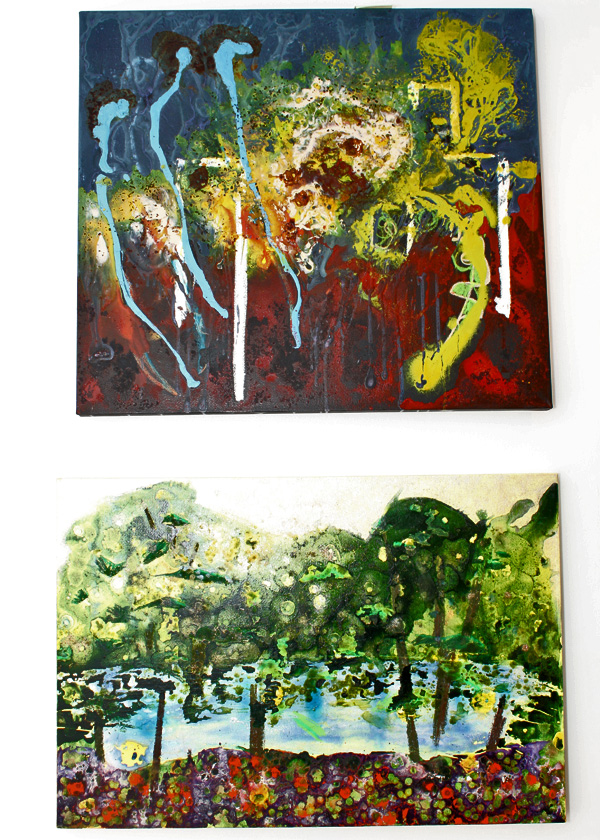
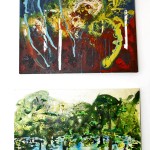
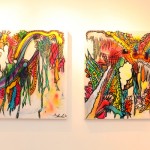
Paintings by Suzy Fedor

“Lots of customers and friends have come by,” added artist and Boat bartender Suzy Fedor. “I’m very happy about this (exhibition) because the people who I serve all the time get to see that there is something else that I do.”

A Pratt Institute graduate, Fedor said she used a variety of mediums in her artwork on display, including oils, acrylics, polyurethane, shellac, lacquer and spices. With a mesmerizing melange of textures and colors, Fodor’s nature-inspired abstracts seem to have sprung forth from the most fantastical of dreams.

Although Fedor has previously exhibited and sold work in solo shows, she confessed to struggling with the business side of her art. “I can sell you beer and liquor easily, but it’s hard for me to put myself out there (as an artist).”

Co-curator Suerte hopes that “Guest Check” will provide all the artists with greater exposure. “A lot of these people work so much that they don’t have time to be their own salespeople or maybe don’t have the experience to deal with galleries, so we want to get these emerging artists more of an audience.,” Suerte explained.

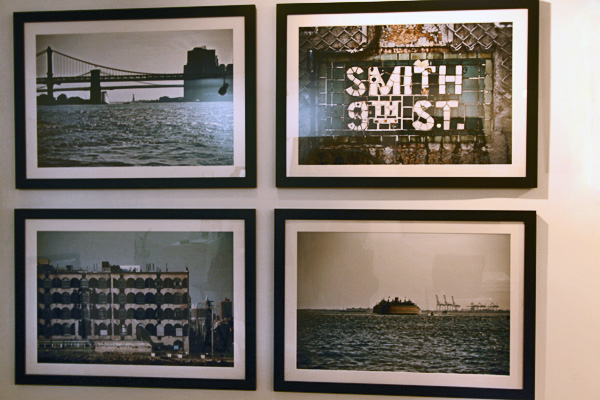
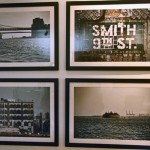
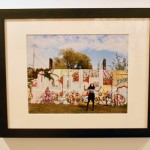
Photos by Michael Dulle

“It’s pretty amazing… and a little surreal, actually,” said self-taught photographer Michael Dulle of seeing his images in a public show for the first time. His photographs of urban decay capture the nostalgic allure that shines forth from the crumbling corners of the city.

“This (show) is the tangible version of what all of us do in the restaurant business every day, which is exhibit our personalities in front of people,” noted Dulle, who is general manager at The JakeWalk.

“That’s really my soul up there,” Onesto noted of her pen-and-ink portraits, in which blooming flowers, outstretched branches and other elegant elements intertwine to create seemingly celestial beings who radiate with joy. “There is a lot of connectedness,” she explained. “I create commissioned portraits because I love connecting with new people and the real essence of their characters.”

“There is a lot to be said for staying true to yourself and making the art you want to make and not just getting the career, even though that’s very commendable,” Onesto added. “For artists, it’s difficult to find the time and being a server really allows for that kind of flexibility.”

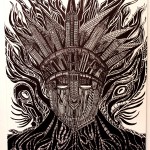
Drawing by Edgartista

This opinion was prevalent among the exhibiting artists, like Edgartista (aka Edgar Gonzalez), who left several jobs to concentrate on his futuristic drawings that meld iconic cityscapes with glimpses of otherworldly visions. A self-taught artist who began drawing seven years ago to liven up his lengthy subway commute, Edgartista eventually surrendered to his creative calling. “Art is the bridge between two different worlds – the one we see and the one we don’t,” explained the artist, who works as a part-time bartender at Chance. “It’s my passion now.”

For Fedor, her job in the service industry actually plays an integral role in her artistic creations. “I do love my (bartending) job because I need people to do my work,” Fedor noted. “I like to fashion myself as a sociologist — I’m here to represent the people who I live amongst.”

As Fedor concluded, “In history, the best way to find out anything about a culture is through the artwork.”

“Guest Check” will be up through October 25th at the Urban Folk Art Gallery located on 101 Smith Street. The exhibition showcases the work of artists Chris Kinsler, Dain Peterson, Danielle Onesto, Edgartista, Jarett Gibson, Kate Sims, Magdalena Marcenaro, Michael Dulle, Renata Marallo, Suzy Fedor and Tamahl Rahaman, representing Bar Great Harry, Bar Tabac, Boat, Chance, Pacifico, Robin des Bois and The JakeWalk.


Photos by Lori Singlar for the Brooklyn Bugle


From the Web

Books

Brooklyn Bugle Book Club: Christianity, The First 3000 Years, by Diarmaid MacCulloch, Part Two

October 7, 2011

Back in July, I wrote a post about this rich and complex book, and I have now finished it (yes, I know it took me a long time, but it’s a long book: more than 1000 pages of text). I continued to find the book astonishing, as much for MacCulloch’s facility with words and clarity of explanation as for the very interesting stories he tells so wittily. MacCulloch is enlightening on such topics as why the Church responded to Galileo the way it did. (MacCulloch describes it as the Church’s defensiveness after Martin Luther, and the fact that the trial took place in the midst of the Thirty Years War, “a destructive battle for the soul of central Europe between Catholic and Protestant, and a time when the Pope was feeling unusually vulnerable.”) I learned the answer to a question I had been wondering about since I read Dorothy Dunnett’s House of Niccolo books: the Papal States came into existence in the 8th century when the Frankish King Pippin (Charlemagne’s father) recaptured Byzantine lands from the Lombards and gave them to the Pope, to the fury of the Byzantines.

And that’s not all. MacCulloch convincingly argues that the Western Church hierarchy grew out of the Roman Empire’s bureaucracy:

One suspects that capable and energetic men who would previously have entered imperial service . . . now entered the Church as the main career option available to them . . . The Western Church has remained notable for the presence within its clerical ranks of a great many who are interested in clear rules and tidy filing systems . . . Western theology has been characterized by a tidy-mindedness which reflects the bureaucratic precision of the Latin language: not always to the benefit of its spirituality. (p. 320)

MacCulloch uses “men” here purposefully; elsewhere he discusses women religious figures, including witches, beguines and mystics as well as several administrative geniuses who founded convents and other communities for women. And remember, in reading this paragraph, that the Western Church did not seriously embrace celibacy for its clergy who were not monks until around the 12th century.

There are many more examples–descriptions of the minimal religiosity of the American Founding Fathers, the resurgence of the Russian Orthodox Church in concert with the FSB, the Russian intelligence service, or the heartbreaking description of the centuries of religious tolerance in Poland that was upended in the 19th century, with tragic results in the 20th. MacCulloch points out that there is no ending to his book; I will leave you with one more long quotation:

Throughout the world at the present day, the most easily heard tone in religion (not just Christianity) is of a generally angry conservatism. Why? I would hazard that the anger centres on a profound shift in gender roles which have traditionally been given a religious significance and validated by religious traditions. . . .It has been observed by sociologists of religion that the most extreme forms of conservatism to be found in modern world religions . . . are especially attractive to ‘literate but jobless, unmarried male youths marginalized and disenfranchised by the juggernaut of modernity’–in other words, those whom modernity has created, only to fail to offer them any worthwhile purpose. (p. 991)

This is a history for all of us. Please share your thoughts in the comments.

Have a book you want me to know about? Email me at asbowie@gmail.com.

From the Web

Profiles

The Pigeon Keepers of Bushwick

October 4, 2011

Mike Tyson ain’t the only guy in Brooklyn keeping boids.

Brooklyn photographer Chris Arnade writes us about a documentary, Pigeon Keepers of Bushwick, that he’s recently worked on with Rattapallax Productions;

I first noticed the beautiful flocks of pigeons high above Maria Hernandez park in Bushwick last summer. At the time I had no idea that they where part of an old sport.

Brought over by the Italians, Bushwick used to have well over a hundred guys (yes all of them are guys) who kept pigeons on the roofs, now its only about twenty. Not raised to race (thats another sport), they are simply collected and bred and then flown to highlight their beauty. These days, its mostly Dominican and Puerto Rican men, almost all in Bushwick, East new York and Brownsville.

Kept in coops on various roofs, the pigeons are fed and flown almost daily in a game of bragging rights against the other keepers.

Once you view the flocks flowing and swirling high above Brooklyn, catching the shifting sunlight, you start to see the artistry involved. These photos where taken over the last year as I wandered from roof deck to roof deck.

From the Web