Monthly Archives

March 2012

Events

Bike Bonanza ‘Learn To Ride’ This Saturday, March 31

March 30, 2012

This Saturday, March 31, organization Bike New York will provide a Learn to Ride class for beginning cyclists and a skills clinic for children who already know how to balance and ride, as part of its Bike Bonanza Festival. The event also includes a bike registration drive, a bicycle swap from Recycle-A-Bicycle (exchange an outgrown bike for a refurbished one of the right size) and a helmet giveaway.

The location: Public School 261, 314 Pacific Street, between Hoyt & Smith Streets in Boerum Hill. Hours: 10 a.m. to 2 p.m. Registration for the class and the clinic is advised but not required. Free!


Source: Cobble Hill Blog
http://cobblehillblog.com/archives/6977

From the Web

Real Estate

Cobble Hill Has Two Of The 10 Most Expensive Blocks In Brooklyn

March 30, 2012

The Epoch Times has been scouring New York City for its “most expensive blocks,” based on median sale prices with at least three home sales over the last two years. Research covers January 2010 to December 2011. In Brooklyn, the newspaper’s March 27 survey comes up with three Park Slope blocks in the top 10, one each in Midwood, Carroll Gardens, Manhattan Beach, Homecrest and Brooklyn Heights… and two in Cobble Hill.

According to Epoch’s research, based on Property Shark stats, Cobble Hill has the No. 4 priciest block: delimited by Warren St to Baltic Street/Clinton Street to Court Street, with a median price of $2.8 million. And at No. 5 in Cobble Hill is Hicks Street to Henry Street/Baltic Street to Kane Street, with a median of $2.7 million.

Overall, the priciest block in Brooklyn is in Midwood, delimited by Avenue I and Avenue J/Ocean Parkway and 7th Avenue, with a median sale price of $4,350,000. The biggest sale there was a single-family home on 935 Ocean Parkway, on Nov. 11, 2010 for $6,130,000. Less than one year later, on Sept. 20, 2011, it exchanged hands again, for a slightly smaller amount of $6,000,000.

See the full article here.


Source: Cobble Hill Blog
http://cobblehillblog.com/archives/6972

From the Web

Events

Squadron to Hold Community Convention Sunday, April 22

March 29, 2012

State Senator Daniel Squadron, whose district includes Cobble Hill, Carroll Gardens (where he lives), Brooklyn Heights, DUMBO and much of lower Manhattan, will hold his fourth annual Community Convention Sunday, April 22, from 2-5 p.m. He has alternated the site of the conventions between Brooklyn and Manhattan; this year it’s Manhattan’s turn, so it will be at the High School of Economics and Finance, 100 Trinity Place (one block west of Broadway, between Cedar and Thames Streets).

Previous conventions have seen productive discussions on topics of particular interest to Cobble Hill residents like traffic, helicopter noise, schools, Brooklyn Bridge Park (Sen. Squadron is represented on its board of directors), and neighborhood preservation.

There’s more information and a list of topics for this year’s convention, and you can RSVP if you would like to attend, here. You can also RSVP by calling 212-298-5565 or by e-mail to squadron@nysenate.gov.


Source: Cobble Hill Blog
http://cobblehillblog.com/archives/6963

From the Web

Events, Kids

Mini-musical ‘Sharin’ a Ride’ at the Transit Museum over Spring Break

March 28, 2012

Looking for something to do with the kids over spring break? The Transit Museum will be presenting a 30-minute long, kid-friendly original musical, ‘Sharin’ a Ride,’ twice a day from April 10 through April 15 (show times are below). The musical, which knits together Earth Day and the transit system, make concepts like sustainability and carbon footprint accessible for children using sing-alongs and skits.

Suitable for children of all ages above age 4, the performance is free with Museum admission ($5/child, $7/adult).

Performance times: Tuesday, April 10 through Friday, April 13 at 11 am and 1:30 pm
Saturday, April 14 and Sunday, April 15 at 1:30 and 3:30 pm

The Transit Museum is located inside the subway station on the corner of Boerum Place and Schermerhorn Street, Brooklyn. More information is available here.

Image courtesy of the New York Transit Museum

From the Web

Brooklyn Heights, Celebrity Residents, Real Estate

Sarah Jessica Parker & Matthew Broderick Move To Cobble Hill Border?

March 24, 2012

Norah Jones, meet your new neighbors: Sarah Jessica Parker and husband Matthew Broderick are moving into a pair of townhouses in south Brooklyn Heights on the Cobble Hill border on State Street near Sidney Place. The New York Daily News‘ real estate guru Jason Sheftell reported late Friday that the family is closing in on a contract, after purchasing a Manhattan townhouse on East 10th St. townhouse two years ago that they never moved into.

The couple currently resides in a townhome in the West Village on Charles Street, near West Fourth Street, with their son James Wilkie, 9, and twin daughters Marion and Tabitha, almost 3. A source told the Daily News, “They loved the West Village but wanted something more private, laid-back and discreet.”

When construction is completed, the two adjoining State Street townhouses the actors purchased will create “an urban mansion of 7,000-plus square feet with a suburban-size backyard,” the News reports. Both were an “off-market” transaction, meaning the houses weren’t officially for sale, according to Sheftell. City records show both are owned by Mark and Diane Baker.

Parker and Broderick paid $18.995 million for the East 10th Street townhouse two years ago, and fully remodeled the home, which the News says is now on the market.

CORE senior vice president Doug Bowen noted, “Brooklyn Heights is the city’s first official historic landmark district; that’s how beautiful it is and what it means to New York. The price difference between the West Village and Brooklyn Heights is sometimes two, three, four times the amount. That’s why even big names are deciding to live here. It’s an easier financial commitment.”

(Photo: New York Daily News)


Source: Cobble Hill Blog
http://cobblehillblog.com/archives/6954

From the Web

News

Wall Street Journal Offers Profile Of “Charming” Cobble Hill

March 24, 2012

“When it comes to charming brownstone Brooklyn characteristics, Cobble Hill has pretty much got all the key requirements covered.” That’s the opening of an 850-word expose profiling Brooklyn’s Cobble Hill neighborhood that appeared in Saturday’s Wall Street Journal.

The piece by Joseph De Avila offers a complimentary persona of the nabe’s “tree-lined blocks, stately townhomes and highly regarded schools,” while boasting that it’s become “a tough place to buy a home. Over the past decade, Cobble Hill has become one of the most sought-after neighborhoods in Brooklyn. The arrival of new families into the historically Italian-American community has been followed by scores of new restaurants, bars and boutiques.”

In addition, the Journal reports, “More recently, Cobble Hill’s popularity has led it to become one of the most competitive neighborhoods in Brooklyn to buy residential property. When the rare townhome hits the market, it tends to get bought up quickly. Large three-bedroom condos are also quick sellers.” The current median asking price for Cobble Hill homes is $875,000 according to real-estate site StreetEasy. In Boerum Hill to the east it is $968,000 million, and in Brooklyn Heights to the north, it is $825,000.

The story also describes Cobble Hill’s parks, schools, restaurants, bars and entertainment. Read the piece here.

(Photo: Wall Street Journal)


Source: Cobble Hill Blog
http://cobblehillblog.com/archives/6951

From the Web

Books

Brooklyn Bugle Book Club: “The Perfect Nazi: Uncovering My Grandfather’s Secret Past” by Martin Davidson

March 23, 2012

Many of the books about the Holocaust that have recently found their way to this household have described what happened to particular families after 1939 (“After Long Silence” by Helen Fremont), or about searches made long after the war to discover what happened to one’s family (“The Lost” by Daniel Mendelsohn, “Walking Since Daybreak” by Modris Eksteins). I highly recommend all three of those books. And now I’m adding another to the list, “The Perfect Nazi” by Martin Davidson.

Like Fremont’s and Mendelsohn’s books, Davidson’s memoir traces what befell his family during the Second World War. As is obvious from the title, however, Davidson’s family wasn’t lost. His father was Scots, his mother German. And what was lost, or buried, or perhaps just ignored, as Davidson describes it, was his German grandfather’s history as a Nazi.

It’s not as if Davidson and his sister, who accompanied him on his quest, didn’t wonder. They went on summer holidays to visit their grandparents (who had separated after the war) in Berlin. There were other family members, too, “family traces, the names of people whom, though they were still alive, we never met.” These included a great-uncle, a great-grandmother, and a step-great-grandfather. It was as if there were a shared family will not to discuss what happened.

Their grandfather, Bruno Langbehn, liked to cause trouble in the family, taking the adolescent Davidson and his sister out for dinner, then plying them with alcohol and bringing them home drunk. He talked a little, about his favorite leisure activity, the apparently benign act of “meeting his Kriegskameraden (his wartime buddies) around a regular Stammtisch, the table that many German pubs have, reserved for use” by regular customers. And, once he died, Davidson’s mother started to let out the tale: her father had not been in the regular army. He’d been in the SS.

So, using archives and records, interviewing family members and relying on histories, Davidson traces his grandfather’s progression. Langbehn’s fascist activities started early; he joined the Nazi Party in 1926, at the age of 19. His low membership number of 36,931 stood him in good stead later, after the Nazi Party had taken power. In the 1920s it made him an outlier. That year, he joined the Nazi paramilitary force the SA, the brownshirts. He was among the throngs who marched at the Nuremberg rallies, and fought in the streets. After brutal, violent marches, he would repair with the members of his Sturm to the local pub, where they would drink and sing, celebrating the violence they had inflicted. In 1937, he applied to and was accepted by the SS. He was injured during the fight for France early in the war. He ended the war years in Prague, working for the SS.

Langbehn was trained as a dentist, and was not a particularly competent or organized monger of SS cruelty. He was, in Davidson’s words, “ a compulsive joiner, a man at his happiest inside institutions, a natural committee member.” And that’s what makes the story so harrowing. As Davidson describes his grandfather’s war years, the ease with which any German could become enraptured by, and convinced of, Hitler’s horrid vision emerges from his factual, historical discussions. Davidson is careful not to speculate about what his grandfather’s state of mind might have been at any point in this trajectory, letting Langbehn’s actions speak, which they do, quite clearly. This can’t have been an easy book to research, or write. It is one that everyone should read.

Have a book you want me to know about? Email me at asbowie@gmail.com. I also blog about metrics for people who hate numbers here.

From the Web

Real Estate

Halstead Property Expands Presence In Cobble Hill: New Court Street Locale

March 22, 2012

Halstead Property has purchased two smaller firms in Cobble Hill and Park Slope, where it is expanding its Brooklyn business, according to The Real Deal. With the purchase of Cobble Heights Realty and Heights Berkeley Realty, Halstead now has five storefront offices in Brooklyn.

The new outposts “secure us two wonderful locations,” Trish Martin, Brooklyn director of sales for Halstead told the real estate pub, saying that Halstead has quickly outgrown its other Cobble Hill location, at 162 Court Street. The new office in Cobble Hill will be located at 206 Court Street, between Wyckoff and Warren streets.

The expansion brings Halstead’s total number of brokers in Brooklyn to 70, as they absorb 15 additional brokers from the newly acquired offices.


Source: Cobble Hill Blog
http://cobblehillblog.com/archives/6946

From the Web

Daniel Radcliffe Films In Carroll Gardens As Beat Poet Allen Ginsburg

March 20, 2012

Now that he has finally shaken off Harry Potter, actor Daniel Radcliffe is ready to play some meaty grown-up roles, including the curly-headed lead in upcoming film “Kill Your Darlings,” where he is taking on beat poet Allen Ginsburg. With co-star Dane DeHaan, filming has been taking place around Carroll Gardens this week.


Source: Cobble Hill Blog
http://cobblehillblog.com/archives/6940

From the Web

Books

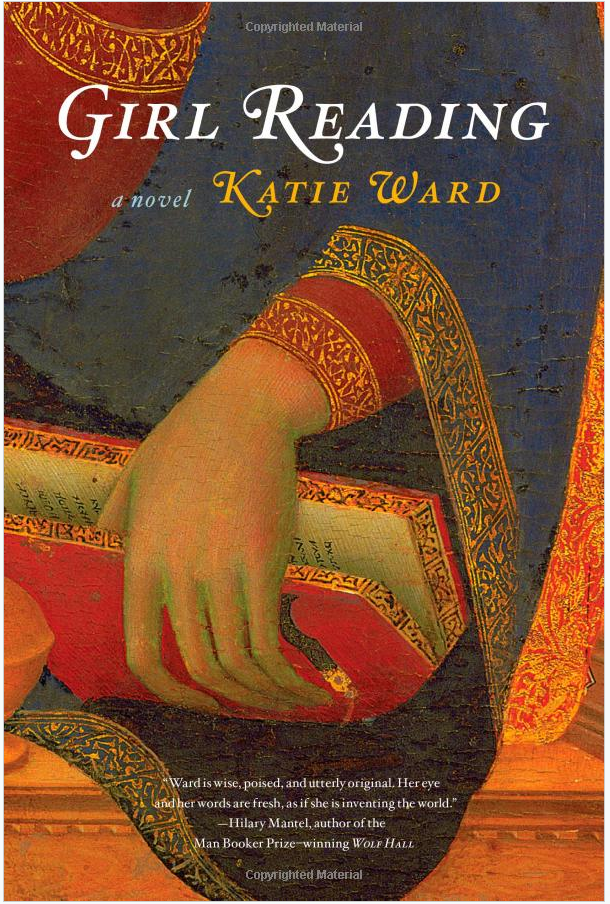
Brooklyn Bugle Book Club: “Girl Reading” by Katie Ward

March 19, 2012

We forget, often, that artifacts survive us, but survive they do, and that is one of the points that Katie Ward makes in her fascinating new novel, “Girl Reading.” Each chapter is about a work of art, usually but not always a painting, always involving a woman and a book. Who are the women in the pictures? What brought them to the artist’s attention? Starting with the work of art, and some known facts about the artist’s life, Ward imagines a story that results in the work’s creation. The book starts in the 14th century with Simone Martini’s Annunciation, and runs until 2060 with an ‘enmeshed,’ that is to say digital, image of a Sibil.

After 14th century Italy, the book moves to 16th century Netherlands (where the painter has a memory of a painting he saw as a student in Italy) and then on to 17th century England. Thereafter the book remains in the United Kingdom. The stories vary in quality. The 14th, 17th, and 18th century stories are labored and distant. I’m not sure why – perhaps the author’s believes that these works of art are less accessible to the modern viewer? (I personally disagree, particularly about the Dutch painter Pieter Janssens Elinga. Or those other wondrous painters of Dutch interiors, Vermeer and Saenredam.) Or maybe they were less accessible to her? The novel comes alive in the 19th century, when it contrasts a pair of twins, one a photographer and the other a medium. From then on, the stories become consistently better.

The stories are linked thematically, rather than through character. There’s also a more literal link, as an object, or the thought or memory of an object, from the previous story turns up in its successor. It’s an original and imaginative approach, both to the works of art and to the stories. At the same time, I needed to see the pictures to understand the story, so I looked them up online. I have pinned pictures of as many of the works of art Ward mentions in her text and a note at the end (perhaps underlining the point of her final story, which explores the loss when all we see are images in the web instead of the physical object) on a Pinterest board. (Pinterest is free but you have to join; you can use your Facebook or Twitter account.)

One feature of the writing increased the emotional distance throughout the work: Ward joined a modern trend and did not include quotation marks, leaving it to the reader to decide what is spoken, and what is interior. I can see how, used sparingly, this technique can have an impact; but used throughout a book, as in this case, it’s off-putting. I’m not the only person who feels this way about quotation marks; here’s the author Lionel Shriver on the issue.

Towards the end of the book, Ward has one of her characters say (or so the context suggests anyway), “Sibil makes you experience, in mesh real or fictionalized aspects of what is already there embedded within a real-world object.” For the character, as for Ward, the work of art is a starting point. Ward, like her artist, shows us the work in a new way. Do you agree? Let us know in the comments.

Have a book you want me to know about? Email me at asbowie@gmail.com. I also blog about metrics for people who hate numbers here.

Photo source: Amazon.com

From the Web