Monthly Archives

March 2012

Events, Existential Stuff

“Planet Under Pressure: Climate Change and Mass Transit” panel discussion at the Transit Museum March 28

March 16, 2012

When Hurricane Irene swept through New York City last August, fear and speculation about its strength – and potential to cause catastrophic flooding – brought the city’s entire mass transit system to an unprecedented halt. Although the storm’s impact was less severe than anticipated, Irene reminded New Yorkers of nature’s eminent power over human endeavors. On Wednesday, March 28, esteemed WNYC journalist Andrea Bernstein will lead a panel of sustainability experts in a discussion about climate change and our system of mass transit.

The panel will include Dr. Klaus H. Jacob, a professor at Columbia University’s Environmental Policy Program and research scientist at the school’s Lamont-Doherty Earth Observatory; and Projjal K. Dutta, A.I.A, LEED AP, who is Sustainability Initiatives Director at the MTA and a leading expert in environmental design and transportation.

The panel is presented in conjunction with the international Planet Under Pressure conference in London, which seeks sustainable solutions addressing issues of climate change. This informal, hour-long program also includes audience Q and A.

Admission is free. The program takes place at the New York Transit Museum in Brooklyn Heights at 6 pm; doors to the program will open at 5:30 pm.

What: Panel Discussion: “Planet Under Pressure: Climate Change and Mass Transit”

Who: Moderator Andrea Bernstein: Panelists Dr. Klaus H. Jacob and Projjal K. Dutta

When: Wednesday, March 28, 6 pm (doors open at 5:30)

Where: New York Transit Museum, inside the subway station on the corner of Boerum Place & Schermerhorn Street, Brooklyn Heights

General information: (718) 694-1600

From the Web

Arts and Entertainment

CBS New York Posts Bids For The Five Best Bars In Cobble Hill

March 16, 2012

CBS New York has posted on its website bids for the five best watering holes in Cobble Hill. Sounds like a good reason for a bar crawl, huh?

The list—which you can see with full descriptors here—was compiled by Jonathan Pogash, a.k.a. The Cocktail Guru, a beverage consultant, writer and educator. He notes, “Cobble Hill, with its well-kept brownstones and vast dining selections, is also a hot-bed of activity in regards to beverages.”

Pogash’s top five are as follows:
* Last Exit Bar, 136 Atlantic Ave.
* Downtown Bar and Grill, 160 Court St.
* Watty & Meg, 248 Court St.
* Henry Public, 329 Henry St.
* Waterfront Ale House, 155 Atlantic Ave. #A


Source: Cobble Hill Blog
http://cobblehillblog.com/archives/6937

From the Web

Real Estate

Residential Brokerage Aptsandlofts.com Joins Court Street Corridor

March 16, 2012

Residential brokerage Aptsandlofts.com is opening a storefront in Cobble Hill, its first outside of its Williamsburg, Brooklyn base. The 2,000-square-foot retailer will launch by the end of June at 236 Court Street, says Crain’s New York Business.

Aptsandlofts.com’s founder and president David Maundrell says that the new office is part of his plan to double the size of the 45-agent firm, with room in the Cobble Hill location for around 40 agents.

“Court Street is amazing. It is a good central location and is a busy street with a lot of foot traffic,” Maundrell told Crains.

The firm joins a growing crop of brokers along the neighborhood’s Court Street corridor. Last month, Prudential Douglas Elliman announced it would be moving into a bigger storefront on Court Street. Its new 1,500-square-foot space at 327 Court St. will be twice the size of its current location at 189 Court St.

Maundrell says he had been eyeing the street for some time for Aptsandlofts.com and “jumped at the opportunity to lease 236 Court St. because of its unobstructed frontage. Because there is a fire hydrant right out in front, no cars can park and block the view from the street.” As well, “The office will be an advertisement for the company in the neighborhood. There’s marketing value in having a lit up storefront.”

In the last five years Aptsandlofts.com has sold $260 million worth of real estate, mainly units in new condominium developments in Williamsburg, downtown Brooklyn and Brooklyn Heights. Recently, the decade-old firm has expanded into townhouse sales.


Source: Cobble Hill Blog
http://cobblehillblog.com/archives/6929

From the Web

Books

Brooklyn Bugle Book Club: “The Warmth of Other Suns: The Epic Story of America’s Great Migration” by Isabel Wilkerson

March 16, 2012

From about 1915 through about 1970 more than six million former slaves and descendants of slaves left the Jim Crow south and moved to cities in the north. As Isabel Wilkerson describes this important internal migration, “it was vast. It was leaderless. It crept along so many thousands of currents over so long a stretch of time as to be difficult for the press truly to capture it while it was underway.” So, as she says, it is the most underreported story of the 20th century United States. Wilkerson’s book provides the remedy, telling the story of the migrants and the migration in carefully researched and vivid detail.

Using interviews, scholarly work, newspaper articles, and public records, Wilkerson pieces together the big picture: the millions who left, the family members and friends they left behind, who met them up north, and what supports they found when they arrived. Wilkerson shows that there were well-established routes, and that people from small towns or the countryside around them tended to go to the same place, following the rail lines. Many of the blacks in Detroit, for example, have roots in Tennessee, Alabama, western Georgia, or the Florida panhandle. Migrants from the eastern states ended up in Washington, Philadelphia, New York, and Boston. Those from farther west often continued west, ending up in California.

Wilkerson goes deeply into the various reasons people left: the sharecropping that left them barely enough to feed their families. The terror and the lynchings, recounted so vividly that they kept this reader up at night. And you can understand why the women agreed to go north; it was their sons, brothers, husbands, fathers and uncles who were routinely humiliated, or jailed, or worse. Collectively, these stories about the search for economic opportunity, not to mention civil, voting, and human rights, make a harrowing portrait of a shameful part of America’s past. Wilkerson describes the fear, and the difficult escapes, in coffins, or crates, that some activists had to make.

Wilkerson tells the stories of three individuals interspersed among the more general narrative. These two men and one woman came from different parts of the south, and ended up in different parts of the country, one in New York, one in Chicago, and one in California. They emigrated from the south at different times over the years. One was a doctor, who achieved great professional success — at great personal cost — in California. One was a Pullman porter, who had a year or so of college but got married and dropped out of school. And the third took whatever work she could find, housecleaning or factory work, to support her family. Their stories illuminate the larger narrative, and their struggles resonate today.

“The Warmth of Other Suns” is a difficult book to read, not because it isn’t well written — it is — but because the story it tells is sometimes so unbearable to think about. Do you agree? Let us know in the comments.

Have a book you want me to know about? Email me at asbowie@gmail.com. I also blog about metrics for people who hate numbers here.

From the Web

History, Music

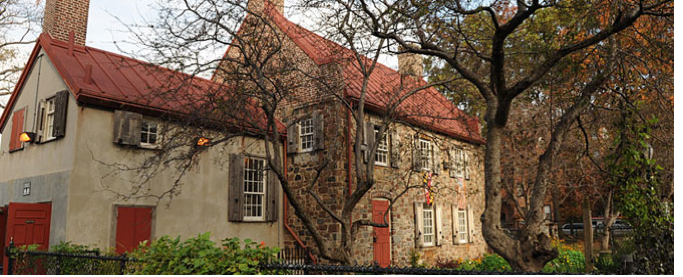
Light &Sound: An Evening Chamber Music Series at Old Stone House

March 15, 2012

Light and Sound Concerts presents two Spring 2012 concerts at the Old Stone House.  Join us for two evenings of wonderful chamber music in an intimate atmosphere.

Friday, March 16 @ 8 pm

Saturday, March 17 @ 8 pm

Featuring
Julieanne Klopic-Violin
Lawrence Zoernig-Cello
Joshua Pierce-Piano

Program: W.A Mozart Sonata #1 (kv 301) in G major for Violin and Piano-
(Mannheim 1778)

Chopin Etude #6 op 10 and #7 op 25 for Cello and Piano-
arranged by Alexandra Glazinov

W.A Mozart Sonata #2 (kv 302) in Eb Major for Violin and Piano-
(Mannheim 1778)

Schubert Trio in Bb (Opus 99) for Violin, Cello and Piano
Reception to follow.

Tickets:  $20 at the door or in advance at Brown Paper Tickets

Friday, March 23 @ 8 pm
Sunday, March 25 @ 4 pm

The Sounds of Spring: A Concert Series
Featuring
Pianist Eleonor Bindman and Violinist Robert Chausow

The musicians will be performing Beethoven’s Sonata #5 for Violin
and Piano in F Major, Op. 24, “Spring” and more!

Reception to follow.

Tickets:  $20/$10 Students & Seniors. Tickets available in advance at Brown Paper Tickets


From the Web

Events

Bach in the Heights Returns Sunday, March 18

March 12, 2012

Bach in the Heights, a group of professional musicians assembled and conducted by Brooklyn Heights resident Edward Houser, will perform this Sunday, March 18 at 3 pm. The program will feature two Brandenburg Concertos, and excerpts from the Magnificat (this excerpt is performed on period instruments) and the Easter Oratorio.

The performance will be held at the Zion German Evangelical Lutheran Church at 125 Henry Street. Tickets are $10. Call (718) 935-1832 or email bachintheheights@yahoo.com for reservations, or purchase tickets at the door.

Read our review of Bach in the Heights’ Christmas performance here. And follow Bach in the Heights on Facebook and Twitter.

From the Web

Books

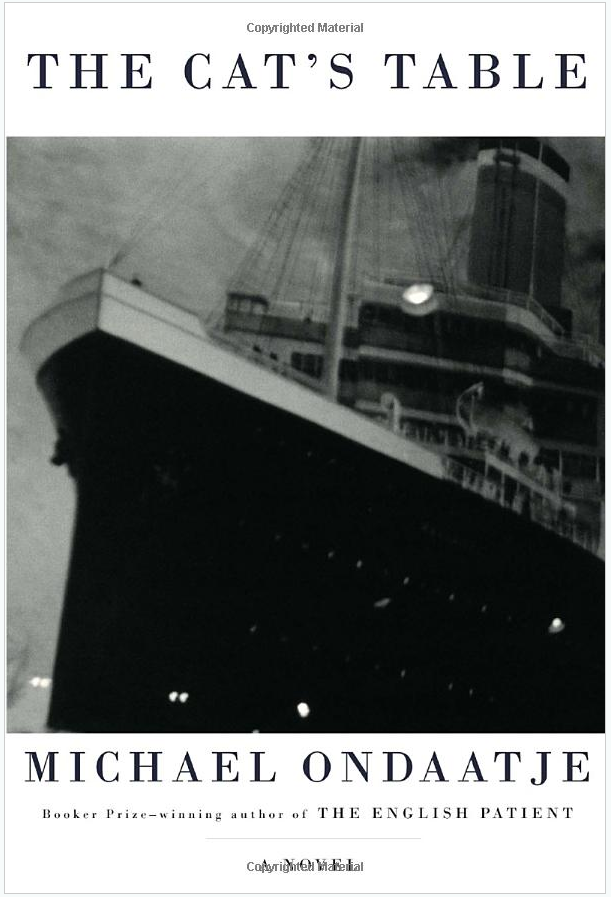
Brooklyn Bugle Book Club: “The Cat’s Table” by Michael Ondaatje

March 9, 2012

For much of the 20th century, long sea voyages were the only way to travel from one continent to another, and thousands of people made long trips. Four or six week long voyages were not uncommon (it took nearly a week to cross the Atlantic in the 1960s) and shipboard romances became the stuff of novels (and movies). In the early 1950s, at the age of about 11, Michael, the main character of Michael Ondaatje’s novel disguised as a memoir, was put on a steamship in Colombo, Ceylon (now Sri Lanka) for a voyage to his divorced his mother in Britain. Later, as an adult, Michael catches up with some of his former shipmates.

It’s hard to imagine now, putting a child on a ship for a three-week voyage. Michael quickly makes friends with two other boys about his age, also travelling alone. Together, they set about exploring the adult world, finding several unreliable guides from their companions at the cat’s table, located at the far end of the dining room, about as far from the social heights of the captain’s table as it was possible to be. As one of them, Miss Lasqueti, puts it, “We seem to be at the cat’s table . . . We’re in the least privileged place.” Mr. Nevil, a retired ship dismantler, doing safety research for the shipping line, teaches the boys how to move around the ship safely, introducing them to the engine room and the lifeboats. Mr. Mazappa, a musician on the skids, teaches them songs and provides other useful information. Michael’s roommate, in charge of the ship’s kennels, runs a nightly bridge game in their cabin. Mr. Daniels, a botanist, takes them to the ship’s hold, complete with a greenhouse full of specimens on their way to Europe. The boys sneak into First Class, and spy on a prisoner, on his way to Europe for trial, when he is brought out for walks late at night.

Michael’s recollections of his shipmates, the developing friendships between Michael and the other boys, and the care and concern the various adults extend toward him make for a lively and expressive story. Unfortunately, the last third or so of the book, when Michael becomes reacquainted with several of the ship’s passengers as an adult, is disappointing. It’s flat and unpersuasive, almost unrelated to what has come before; the foreshadowing is poor, and the two halves of the story seem disconnected. It’s as if Ondaatje grafted two ideas together, and thought of their relationship after the fact.

All the same, this is a book worth reading, because the beginning parts are so entertaining and interesting. If you can figure out how the last third or so relates, or if you think Ondaatje does a better job tying it all together than I think he does, let us know why in the comments.

Have a book you want me to know about? Email me at asbowie@gmail.com. I also blog about metrics here.

From the Web

Events

Proteus Gowanus Workshop: Mapping Migration

March 6, 2012

Proteus Gowanus will hold a workshop about mapping migrations, Saturday, March 10, 8 pm, as part of its year-long look at migration.
$5 admission

Here’s the description: Where does a journey begin? And how do we know where it ends? Join Dr. Debra Tillinger in an exploration of the art of mapping, from the times of ancient seafarers to the present day. This workshop, part of the yearlong Migration theme at Proteus Gowanus, will focus on the famous longitude problem, a riddle of the 18th century whose solutions included magic and mathematics. We will explore ideas in mapping from Lewis Carrol, Umberto Eco, and other artists and thinkers.

From the Web

Books

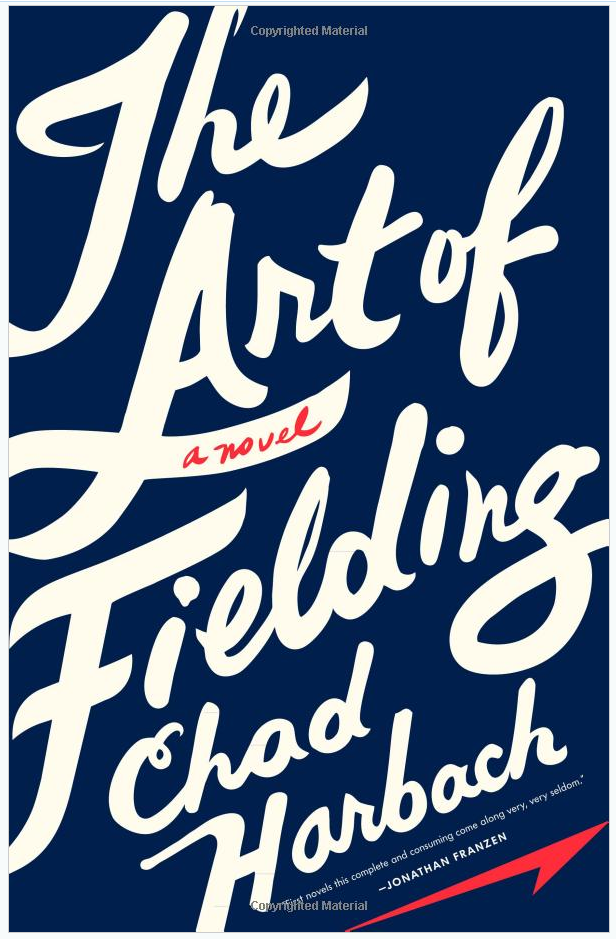
Brooklyn Bugle Book Club: “The Art of Fielding” by Chad Harbach

March 5, 2012

Despite what I must admit is a rather dim memory of the New Yorker review suggesting that “The Art of Fielding” is not really a book about baseball, I have to say that it is not about baseball in the same way that “Moby-Dick” is not really a book about whaling. That is to say, “The Art of Fielding” is a book about growing up in which most of the growing up takes place around a baseball team. As Harbach sweetly puts it, his characters feel themselves unfolding within themselves for most of the novel.

The baseball team belongs to Westish College, a small D-III liberal arts school located in Wisconsin on the shore of Lake Michigan. The growers-up are Henry Skrimshander, an unprepossessing teenager who plays shortstop surprisingly well, Mike Schwartz, Captain of the Westish Harpooners baseball (and football – it’s a small school) team, and Owen Dunne, winner of the Maria Westish award and Henry’s roommate. Pella Affenlight, daughter of Westish’s president, Guert, is another. She returns to her father’s home after an adolescent rebellion and early marriage, seeking to recover her college options.

Guert Affenlight is an academic star, a specialist in Herman Melville, who left Harvard to become president of Westish. You may be wondering how a Midwest school came to be known as the Harpooners, even if it is situated on one of the Great Lakes. While in the library one night as a Westish undergraduate, Affenlight discovered the text of a lecture delivered by H. Melville.

The stated topic of the lecture was Shakespeare, but H. Melville, excusing himself by the sly pronouncement that “Shakespeare is Life,” used the bard as a reason to speak of whatever his wished–Tahiti, Reconstruction, his trip up the Hudson, Webster, Hawthorne . . . all with a scattered, freewheeling ferocity that would have done little to refute his in-laws’ allegations of mental imbalance.

In the way of these things, the professor to whom Affenlight handed over his discovery published an essay without acknowledging Affenlight. That Affenlight took this in stride as he went on to become an academic tells you a lot about his character.

Mike, who is preternaturally mature, arranges with Guert for Henry to come to Westish on a last-minute baseball scholarship, and takes over his training, making sure that Henry will grow into the role of baseball superstar. Henry complies, until an errant throw robs him of his self-confidence and his skills erode. Complications of all sorts – romantic, athletic, academic and administrative – ensue. Even Affenlight has some growing up to do. He never married, but is thoroughly surprised to find himself falling in love with the beautiful, and gay, Owen.

Harbach owes (and acknowledges) debts to, among others, John Irving, Jay McInerney, Jonathan Franzen, and obviously Herman Melville. The story is entertaining, allusive, and yes, very much about baseball. It’s a debut novel, and there are some large gaps and unlikely but convenient events. What did you think? What other references and allusions did you see? Let us know in the comments.

Have a book you want me to know about? Email me at asbowie@gmail.com. I also blog about metrics for people who hate numbers here.

From the Web

Books

Brooklyn Bugle Book Club: “Hav” by Jan Morris

March 2, 2012

The noted travel writer Jan Morris has published very few novels, but I found one of them at the Brooklyn Book Fair, published, perhaps not surprisingly, by NYR Books, a source of many of my favorite books. “Hav” is a novel as travelogue, allowing Ms. Morris to indulge what must have been sorely tempting during her wonderful travels: a taste for the absurd.

The novel is written in two parts, “Last Letters from Hav,” first published in 1985, and covering an early visit to the mythical Hav, and “Hav of the Myrmidons,” published in 2005 describing Ms. Morris’ “return” 20 years later. In 1985, one still entered Hav the old-fashioned way, riding a train that came down through a switch-backed tunnel under the mountain. Those au courant knew to leave the train at the frontier, and get a ride over the mountains in time to watch the train emerge from its “spiralling descent within the limestone.” Perhaps it is this touch that leads Ursula K. Leguin, in her introduction, to describe the work as science fiction. But Hav is full of peculiarities that challenge the laws of physics, of politics, and of pretty much everything else.

Everyone came to Hav – perhaps even Hitler. There is a history of defeated Crusaders, their departure still noted into the 20th century. There are a Grand Mosque and a Grand Bazaar. Hav rig fishing boats are illustrated, and Hav’s local specialties include snow raspberries, in season only briefly but much loved. There are local fauna – “the Hav hedgehog, Erinaceus hav, is odd too, since it is tailed, like a prickly armadillo, and the Hav terrier is like a little grey ball of wire wool, and I believe the troglodytes breed a pony of Mongolian origins on the foot-slopes of the escarpment.” There are also Hav cattle and a Hav bear.

There is a little Russian colony, Malaya Yalta, and a thriving Chinese entrepot, Yuan Wen Kuo. Engaging locals introduce Morris to everyone else, and she goes everywhere, welcomed and feted. She visits the Hermitage, where some local anchorites welcome her. She even peeps in at a secret meeting of local Cathars, who seem to have survived quite nicely in Hav. Morris strikes out on her own to the harbor headlands, (one of several places where Hav resembles Morris’s Sydney, Australia) to visit a local landmark, the Iron Dog, a mysterious statue standing sentinel over the entry.

Back to the troglodytes. Morris visits them, too, in their caves in the escarpment, the same one the train tunnels through. She spends the night in one of the caves in her sleeping bag, and then is taken to visit the bears, which “looked just like piles of old rugs, heaped on top of one another, like the discarded stock of a carpet-seller. . . One or two rolled their heads over sleepily like cats, burying them in their paws.”

Not all is well in Hav, and Morris’s first visit ends among ominous signs. Her forebodings are borne out on her repeat visit 20 years later, described in “Hav of the Myrmidons”. Everything is changed. Hav is now the Holy Myrmidonic Republic; tourists are mostly kept to an island in the harbor, except when they have a special pass. Familiar landmarks are gone, burned to the ground, bulldozed, or built over. Morris’s friends, so open and welcoming 20 years before, barely speak to her. Poking around, Morris is able to find some of the places she had so enjoyed on her earlier visit, but leaves quickly, saddened by the changes.

Hav is not for everyone – it’s a secretive little enclave somewhere in the Eastern Mediterranean, a peninsula jutting into the Mediterranean cut off by a mountain range from some country east of Lebanon and west of Turkey. And “Hav,” which gently parodies the conventions of travel writing, might not be for everyone either. But fans of Jan Morris will find their way into this landscape of the mind by using a little imagination. Do you agree? Let us know in the comments.

Have a book you want me to know about? Email me at asbowie@gmail.com. And check out my blog about metrics for people who hate numbers.

From the Web