
Monthly Archives

May 2012

Books

Brooklyn Bugle Book Club: “Absolution” by Patrick Flanery

May 18, 2012

Cover image via Amazon.com

Clare Wald is a South African writer. She lives alone, with Marie, her ‘woman of business.’ Sam Leroux, an academic from an American university, has come to South Africa for a series of interviews with her, as he is Clare’s cautious choice as her authorized biographer. Clare is divorced; her son, Mark, is a lawyer with a wife and children. Her daughter, Laura, an activist during the last days of apartheid, is missing and is most likely dead – neither Clare nor her former husband has heard from her for many years.

The narrative unfolds in several dimensions, with alternating sections narrated by Clare, by
Sam, and by an unnamed narrator. There is an internal narrative, also named Absolution, that tells the story of Clare’s and Marie’s survival of a home invasion and their move to a new house with a wall surrounding the garden, a gate, a panic button, a security service on call, and watchful neighbors. Absolution relates several episodes in which Clare discusses the home invasion with a police investigator whose frame of reference is so different from Clare’s that there can be no meaningful communication between them. It’s not clear whether the home is a metaphor for all of South Africa, or just all of Clare’s life. It is clear that the home has become a prison to her.

Sam’s chapters describe his return to South Africa after many years abroad; his wife, an American journalist, joins him in Part II, when he is teaching in Johannesburg and writing his book. Through his eyes, we see the precautions residents take in the crime-ridden society that developed in South Africa after the violent transition from the apartheid system. Wealthy white people routinely lock their refrigerators and cabinets so that their domestics cannot steal food from them. Showers have locks so that in the event of a home invasion the resident can squeeze into a very small space and hope the invader will give up and leave. Marie urges Clare to consider building a second defensive ring around their house, so that deliveries can be brought inside the first wall but not collected into the second until the truck making the delivery has left the first perimeter.

Clare’s chapters are based on Laura’s notebooks, left behind and delivered to her by some of Laura’s fellow radicals. Laura has laid bombs that blew up a plant, and much of Clare’s narrative reconstructs Laura’s movements after the bombing. From the notebooks, Clare can tell that Laura’s ride to safety after the bombing never materialized, so Laura decided to hitchhike, and was picked up by Bernard, a trucker, and Sam, his ward. This decision possibly compromised Laura’s safety, and Clare dwells on the uncertainty of what happened to her.

As Flanery frames it, no one who lived in South Africa was guilt-free, and no one who lives there now can escape the legacy of violence. This is a complex novel, and an extremely assured one, told in the same even tone whether the topic is bombings, nightmares, murders, or a dinner party. I highly recommend it. There’s a lot of guilt, and a lot of fault, both of action and inaction. While the many strands of the story are knit together quite satisfactorily, Flanery leaves enough ambiguity to support several possible interpretations of the novel. Of all the many guilty characters, Bernard is the only one whose guilt seems simple to me. Do you agree? Let us know your thoughts in the comments.

Have a book you want me to know about? Email me at asbowie@gmail.com.

I also blog about metrics for people who hate numbers here.

From the Web

Arts and Entertainment

Super Kitsch! Nostalgic Shuffleboard Club Coming To Gowanus

May 17, 2012

A campy shuffleboard club inspired by Florida’s senior scene is making its hipster debut in Gowanus. Golden Girls unite!

Owners of The Royal Palms, a grocery-store sized club featuring regulation-size shuffleboard courts and a full bar, is set to open their new venue in a 17,000 square foot repurposed Gowanus building—location not yet disclosed—featuring a nostalgic bent with lounge music, bingo, Yahtzee, key lime-flavored cocktails and episodes of “The Love Boat” on TV.

The Brooklyn Paper reports that the coming shuffleboard club will offer a dozen regulation-sized courts and a potential roof deck. A final leasing agreement is in the works, thus co-owner Ashley Albert declined to give away the exact location, but she says it will “likely be a super-affordable spot to channel your inner snowbird. We want it to feel like a Florida hotel from the ’70s. It’s a fun vintage thing for 20-and-30-somethings to try. There’s just something kind of cool about old time-y activities.”

(Photo: TV My Wife Watches blog)


Source: Cobble Hill Blog
http://cobblehillblog.com/archives/7205

From the Web

Yikes! A Bed Bug (As In One) Found On Premises At The Carroll School

May 17, 2012

And we thought the bedbug epidemic had bitten the dust. But according to a notice sent to parents of The Carroll School Tuesday, the pesky little critters are still gnawing in Carroll Gardens… or at least one is. The Patch reports that a notice was sent home with kids alerting them that a single bedbug—yes, as in one—was found on the premises of P.S. 58 at 330 Smith Street. A flyer from Principal Giselle McGee dated May 14 stated that “there are bed bugs in the school,” according to a parent that contacted the Carroll Gardens blog.

“We recently found a confirmed bed bug in your child’s school,” the letter reads. “Finding a bed bug does not mean that our school is infested. Bed bugs are often unknowingly brought into schools by building occupants and as a result we may have future sightings.” The notice also includes a description of the symptoms of a bed bug bite.

Patch contacted the school, where a source acknowledged that “a single bug” had been identified on a child and that a technician will be coming in for a second time later this week to check for a potential… second bed bug.


Source: Cobble Hill Blog
http://cobblehillblog.com/archives/7200

From the Web

Books

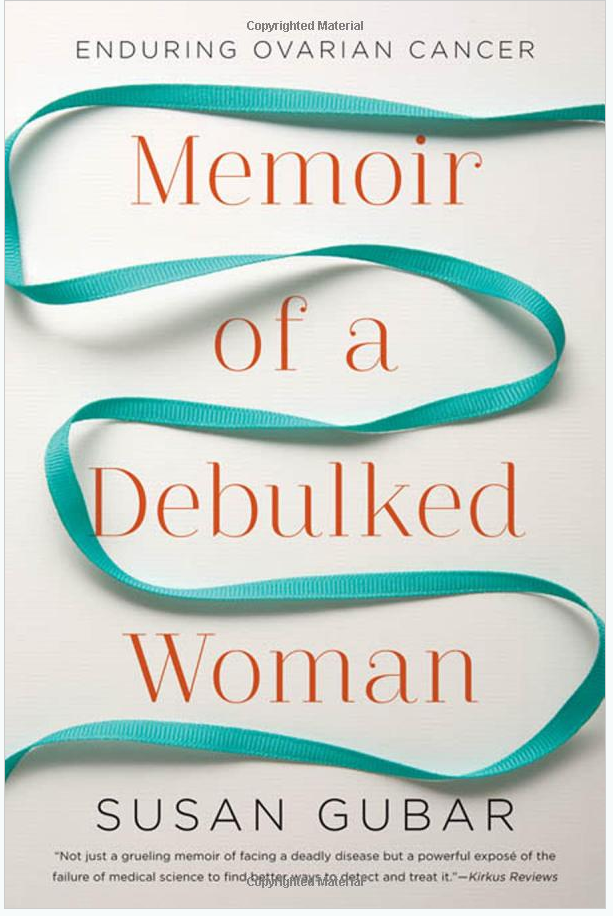
Brooklyn Bugle Book Club: “Memoir of a Debulked Woman: Enduring Ovarian Cancer” by Susan Gubar

May 14, 2012

Image via Amazon.com

Down, down, down into the darkness of the grave
Gently they go, the beautiful, the tender, the kind;
Quietly they go, the intelligent, the witty, the brave.
I know. But I do not approve. And I am not resigned.

Indiana University English professor Susan Gubar did not quote Edna St. Vincent Millay’s poem “Dirge Without Music” in her brave memoir of her first years of living with ovarian cancer. But the tension Millay relates so vividly came into my mind as I read Gubar’s description of her efforts to face cancer and accept reality without resigning herself to fate or any other abstraction.

As Gubar explains it, ovarian cancer is a systemic disease. Originating in an organ deep within the abdominal cavity, it is often hidden, its symptoms taken to be indigestion. As a result, it is often discovered late, when it has developed into Stage III or Stage IV disease, affecting some or all of the rest of the abdomen. The initial treatment, ‘debulking surgery,’ in which the abdominal cavity is opened and all visible signs of a perhaps metastasized cancer are removed, is uncertain but likely to be horrible. Anticipating her debulking surgery, Gubar writes,

Who knows if malignancies have spread from both ovaries over the fallopian tubes, the uterus, the cervix, the appendix, the bladder, the liver, and parts of the intestines or lymph system? . . . efforts to stop the cancer’s growth require surgeons to get up the gumption to gut a seemingly vital woman, removing many of her internal organs.

At the time of her diagnosis, Gubar decides, she will go through the surgery and one round of chemo, and then seek palliative care. About half of US debulking surgeries, Gubar reports, wind up as ‘suboptimal:’ a residual tumor of more than one centimeter remains after surgery. And that’s what happened to her. But Gubar’s point is different:

Physically, immediately after the surgery I will suffer from what the counterattacking doctors do against the cancer, rather than from the disease itself. The hardly noticeable symptoms of cancer pale in comparison to those produced by the surgeons determined to excise it.

After the surgery, Gubar suffered serious side effects, including a perforated colon that developed into an abscess requiring first a drain and then a second abdominal surgery and an ileostomy – and all this during chemo. Gubar writes openly about the physical degradations and humiliations of the ileostomy, not to mention the daily challenges required to bypass the usual route of defecation, calling it ‘unspeakable and unspeakably anxiety-producing.’ She writes movingly about the impact her injured body has on her soul and her efforts to come to terms with death.

Today a number of scientists, looking for the fountain of perpetual youth, seek to make death depart from the human condition; however, it seems to me, as I now confront mortality at closer proximity, that intimacy with the mortal body educates us. Cancer and its treatments teach us, or have taught me after two years of coping with bizarre consequences, that life without the finitude of death–the inconceivable finality of one’s own death–would be intolerable.

Betrayal by her body, betrayal by her spirits, betrayal by her doctors. No wonder the thought of Judas, the subject of Gubar’s most recent book before the diagnosis, is a recurrent motif. Gubar recites poetry and prose she has loved, and thinks about the images Frieda Kahlo produced, the painting “The Dream” most of all, as she copes with all this. And she worries about the effect of her illness on her husband, her daughters and step-daughters, and her students.

Yet Gubar endures everything, and writes her book while she is enjoying – yes, that’s the word I mean – her remission. She explores the implications of her change of heart – she has decided to undergo another course of chemo after her first remission comes to a close. Her final chapter is a meditation on what she calls loconocology, “the double binds into which current protocols put medical practitioners of cancer and their patients.” She includes a plea to medical science to find a way out of these paradoxical choices, for the sake of the many women diagnosed with this disease each year.

This is a generous and full-hearted book, an anguished and powerful description of one woman’s successful effort to come to terms with a horrid reality. Medical ethicists and gynecologists must read this thoughtful book, and so should all the rest of us.

What was your response to this powerful book? Let us know in the comments.

From the Web

Arts and Entertainment, Kids

Urban Folk Art Gallery Shines Spotlight on P.S. 8 Students

May 13, 2012

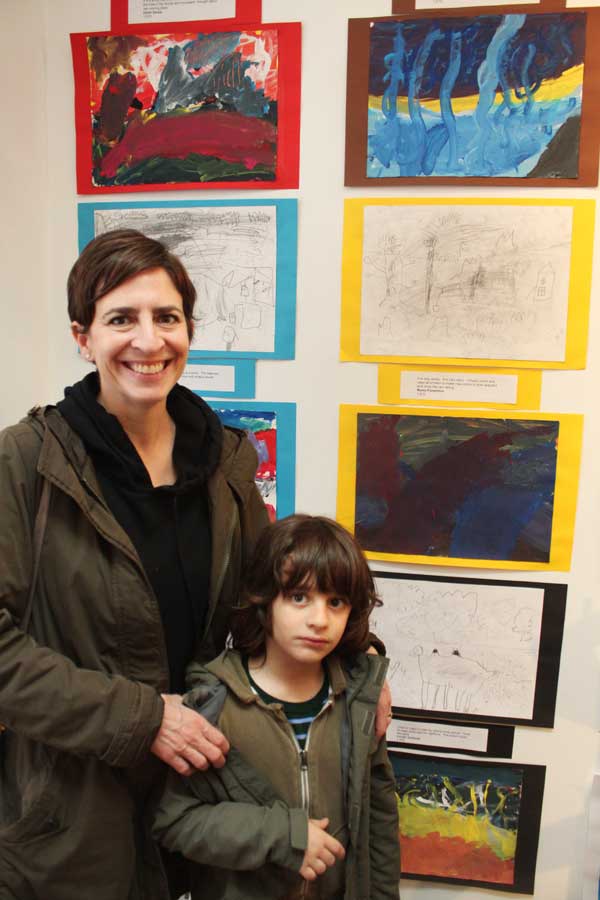
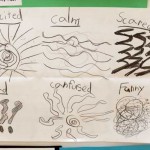
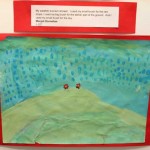
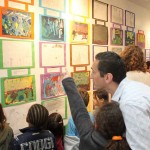
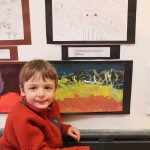
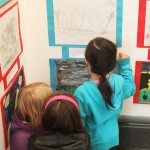
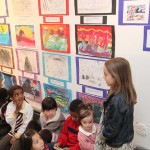
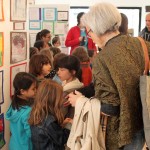
Creativity has spilled forth from the classrooms of P.S. 8 and found its way onto the walls of the Urban Folk Art Gallery, thanks to the “How’s the Weather?” exhibition that features dozens of landscape paintings and drawings by first-grade students from the Brooklyn Heights elementary school.

The group show marks the end of a 14-week workshop held at P.S. 8 in conjunction with the Manhattan-based teaching arts organization Studio in a School. Teaching artist Belinda Blum collaborated with P.S. 8 teachers Carolyn Saffady, Sjene Kendrick, Mackenzie Field, Sandy Long and Matthew Levy to provide a comprehensive visual arts program shaped by concepts from the students’ first-grade curriculum.

“We thought about what we were teaching in our curriculum and then what naturally lends itself to artistic expression,” Saffady explained.

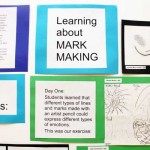
Science became a focal point of the workshop, as the students learned how to portray different types of weather conditions with pencils and paint. The program progressed from simple pencil sketches to painted landscapes with horizon lines and varied brushstrokes.

“They were studying weather and cloud formations so the teachers and I decided that we were going to make this really about the process of mark making through drawing and painting,” Blum noted.

Blum, who is a Gowanus-based oil painter, has conducted Studio in a School workshops at P.S. 8 since 2006. However, this year marks the first time that her residency has culminated with a group show in a local gallery. The idea came from Saffady, whose boyfriend is Urban Folk Art Gallery co-owner/curator Adam Suerte.

“She is very art-inclined and was just thinking of a way to end it on a great note,” Suerte said, noting that the gallery setting gives the students a “nice context” in which to see their art.

“I think it is amazing that the kids get to see their work outside of the school,” Saffady added. “It is really special for them.”

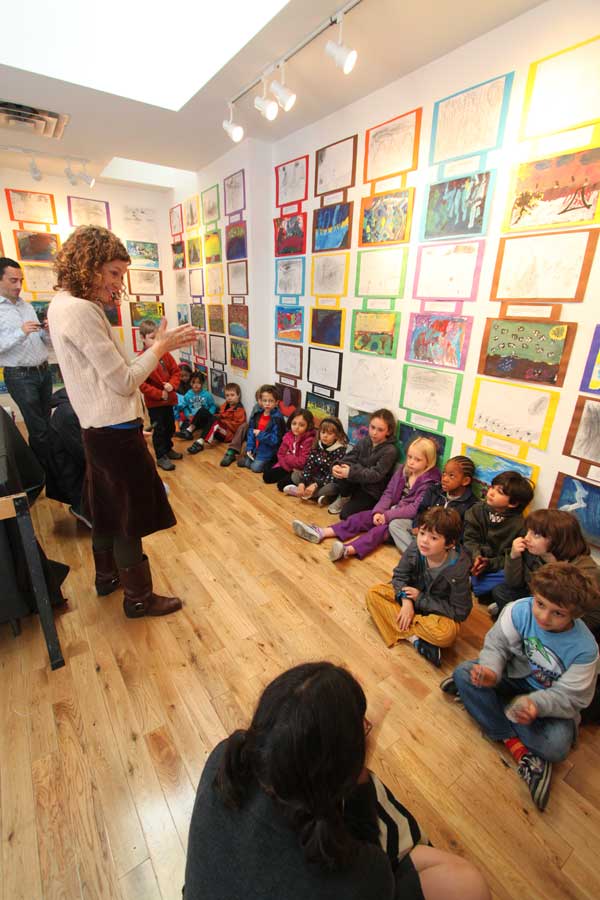
The young artists seemed truly thrilled to tour the gallery and view their artwork when they stopped by on a class outing last week.

“I’m excited,” said P.S. 8 student Numa Fiorentino, who was accompanied by his mother, Emy Gargiulo. He described his painting as “very rainy and stormy,” an effect he achieved with a technique taught by Blum during the workshop. “She said we could use the back of our brushes to make the rain,” he explained.

“Belinda (Blum) is particularly good with bringing out the best of their skills,” added Gargiulo. “They are starting to be little artists and are really proud of the work.”

Several students enthusiastically spoke about their paintings during a group discussion led by Blum on the morning of their gallery visit. These moments of reflecting and sharing together have been another integral part of the program, as they have given students the opportunity to practice new vocabulary and observe each others’ work. The children also had occasion to express themselves through writing during the workshop, as each penned a short paragraph that is on display alongside their work. This exercise was formulated to help them strengthen their literacy skills and provide them with a channel to describe their creative process.

“It’s amazing – these kids have so much to say,” Blum noted. “They wrote about the process a lot and the choices that they made.”

The gallery exhibition has added yet another layer of learning to the workshop this year, as it has allowed for the students to experience the community beyond their classroom in an innovative and engaging way.

“At this age they’re really trying to understand their community, so it helps them learn that their community expands for them outside their school,” Blum said.

Gallery visitors can even provide the young artists with feedback via a signing book that will be shared with the students at the conclusion of the show. “How’s the Weather?” will be up through May 19th at the Urban Folk Art Gallery located on 101 Smith Street.


Photos by Lori Singlar for the Brooklyn Bugle


From the Web

NYC Bike Share Program: Cobble Hill Shunned Until At Least Spring 2013

May 13, 2012

New York City’s Bike Share Program has announced its citywide locations that include Brooklyn’s portion of 600 city bike share stations. If you’re hoping for a quick ride on the new blue “Citi Bikes” in Cobble Hill, forget it for now.

According to the city Department of Transportation, which is sponsoring the initiative with Alta Bicycle Share, Cobble Hill locations won’t be considered for at least a year. The closest locations in the borough are in Brooklyn Heights, Downtown Brooklyn, Williamsburg, Fort Greene, Clinton Hill and Bed-Stuy.

The city’s DOT released a draft map of the first locations in this summer’s rollout of a portion of their 600 Bike Share docking stations. Phase II will debuted in Spring 2013, including Park Slope, Cobble Hill, Prospect Heights and Crown Heights.

The installation of bike docking stations will begin in late July. The solar-powered, wireless docking stations will be located on sidewalks, curbside road space and plazas, and accommodate between 15 and 60 bikes each.

The closet dock to Cobble Hill will be on Fourth Avenue and Dean Street in Boerum Hill. According to the DOT, there will be 27 docks on the sidewalk at this location.


Source: Cobble Hill Blog
http://cobblehillblog.com/archives/7193

From the Web

Arts and Entertainment, Events

Booze & Books: NYC Lit Crawl Coming To Brooklyn For First Time May 19

May 13, 2012

The Brooklyn Lit Crawl beer-and-book festival, which stumbles through 13 Cobble Hill, Carroll Garden and Brooklyn Heights venues on Saturday May 19, 6-8 p.m., will comprise cocktails, trivia contests, book readings and special events along the way.

Venues include Zombie Hut (273 Smith Street), Knit Lit (253 Smith), People’s Republic of Brooklyn (247 Smith), BookCourt (163 Court Street), Last Exit (136 Atlantic Avenue) and the After Party at 8 p.m. at 61 Local (61 Bergen Street).

Special events include: * Armchair/Shotgun enacts a live old-timey radio show. * The Liars’ League NYC acts out the latest story by Mark Haddon, author of “The Curious Incident of a Dog in the Nighttime.” * The Cambridge Writers Workshop presents Literary Cabaret.

The inaugural NYC Lit Crawl took place in September 2008. Last year’s event in Manhattan drew more than 1,200 crawlers, enjoying 70+ authors at some 20 events. This is its first extension into Brooklyn. The full schedule is here, with all info here.

“Brooklyn is so literary, it seemed like a no-brainer,” founder Suzanne Russo tells the Brooklyn Paper. “There’s so many friendly venues and so much going on in the literary sphere there, we thought it’s really the place we should be. The venues are smaller, there’s an energy in Brooklyn, a creative spirit that’s more of a go with the flow, we’ll-do-whatever kind of thing.”


Source: Cobble Hill Blog
http://cobblehillblog.com/archives/7187

From the Web

Books

Brooklyn Bugle Book Club: “Troubles” by J.G. Farrell

May 11, 2012

Image via Amazon.com

“Troubles” is JG Farrell’s long exploration, from the point of view of an English visitor, of Ireland in the years 1918-1921, immediately after the First World War and, perhaps more relevantly, shortly after the Easter Rising of 1916. “Troubles” won the Lost Man Booker Prize  of 1970, and is the first published of J.G. Farrell’s great Empire Trilogy; the others are “The Siege of Krishnapur” (about the 1957 Indian Mutiny, it was the winner of the 1973 Man Booker Prize) and “The Singapore Grip” (about the Japanese capture of Singapore in 1942). Together, the books explore the impact of the British Empire on the colonized peoples and the British who went into the colonial service to govern their lands and administer their laws.

At the end of the Great War, Brandon Archer, who has recently been released from hospital, where he was treated for unspecified war wounds, has traveled to Ireland. He is visiting Angela Spencer and her Anglo-Irish family, who own a magnificent if crumbling hotel on the east coast of Ireland called the Majestic. Angela and Archer have an uncertain but quasi-official understanding that they will be married; at least, that is what Archer believes, but Angela’s indifferent behavior towards him rather undermines that belief. He befriends Angela’s brother Ripon, and their younger twin sisters, the misnamed Charity and Faith, and Sarah Devlin, the crippled (and Catholic) daughter of a banker in neighboring Kilnalough. Archer bemusedly becomes more and more involved in helping Angela’s father, the quite possibly mad Edward Spencer, in running the hotel, still populated by a set of genteel ladies with little money and no place else to go. Eventually, it becomes clear, even to Archer, that Angela is too unwell ever to wed. After her funeral, he returns to London on family business, and Sarah visits him there. And then his hopes for a future with Sarah take Archer back to the Majestic just as Irish unrest is stirring.

Unable to leave, Archer spends a lot of time exploring the hotel and its grounds. Sometimes he accompanies the increasingly unstable Edward on his rounds. Starving tenants steal food from the hotel’s fields, and Edward is determined to protect his fief – he establishes a shooting range, houses some pigs in a squash court, and is intent on setting up defense lines that will allow him to guard his hotel from the violence he expects from the Irish Republicans. Archer looks on or participates in all of these activities. At other times Archer is accompanied by one or more of the young ladies, and in the evening he plays cards or talks with the older ones. The old ladies play their part as well, carrying on shopping trips into the local town of Kilnalough as if nothing were wrong. Interspersed with the detailed descriptions of the old ladies and their efforts to teach the upstart Irish some manners during shopping trips and an account of a final grand ball Edward has decided to throw are news articles describing incidents of resistance to British rule, in Ireland, in India, in Mesopotamia.

There are some very funny moments in this book. My favorite theme among them was the cats who keep appearing and reappearing. And reproducing. The Majestic and Edward Spencer are entertaining stand-ins for the British Empire in decline. But what I kept thinking about was this: what draws Brandon Archer to Kilnalough and the ramshackle Majestic is the young women. But what keeps him there well past the point of safety? Lethargy? Noblesse oblige? Perhaps after the great war he feels there is nothing left to live for? Let us know your thoughts in the comments.

Have a book you want me to know about? Email me at asbowie@gmail.com. I also blog about numbers for people who hate numbers here.
From the Web

Health, News

SUNY Downstate to Slash Jobs, but LICH May Gain

May 9, 2012

SUNY Downstate Medical Center, which took control of Long Island College Hospital last June, faces an operating deficit and will have to eliminate jobs and close or combine some operations.

New York Post: SUNY Downstate Medical Center announced tonight that it will have to perform extensive “financial” surgery to slash jobs and eliminate redundant services at its three medical facilities to stem red ink.

The scalpel will be used at University Hospital in Flatbush, Long Isand College hospital in Brooklyn Heights and its facility at the former Victory Hospital site in Bay Ridge.

However, the Post story says, a task force report to SUNY Downstate noted that LICH is “severely under-utilized” and that SUNY Downstate should “consolidate its inpatient services at the LICH campus and scale back University Hospital.”


Source: Cobble Hill Blog
http://cobblehillblog.com/archives/7175

From the Web

Heights’ Author Jennifer Miller Profiled About Novel ‘Gadfly’

May 9, 2012

Brooklyn Heights resident Jennifer Miller, author of just-published “The Year of the Gadfly,” is profiled on webbie Capital New York, which writer Yevgeniya Traps describes as “a buzzy debut novel set in a posh private school beleaguered by secrets and scandals.”

The piece opens: “At 4 p.m. on a recent Friday afternoon, the Tazza coffee shop in Brooklyn Heights looked like it had been filled by Central Casting. Toddlers gamboled at [sic] their patient, lovingly distracted mothers’ feet; school kids, just set free for the weekend, gorged on pastries; law students seemed lost in their melodramatically oversized tomes; men with varying degrees of facial hair idled with their iPads.”

On her own website, Miller quips: “Jen holds an MFA in fiction-writing and a MS in journalism from Columbia. She is a native of Washington, and currently lives in Brooklyn, with all the other writers.”

Read the full profile on Capital New York here.
(Photos: Capital New York)

From the Web