Monthly Archives

June 2012

Events

‘Photoville’ Village Exhibit Turns BBP Waterpark Into Rustic Repository

June 30, 2012

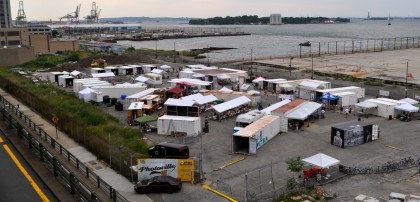
The Photoville exhibit located along the uplands of Brooklyn Bridge Park’s Pier 3 from June 22 to July 1, has added a rustic touch to the Brooklyn Heights waterfront. In fact, it makes the former powder blue warehouses that lined the locale look downright charming.

Brooklyn-based art cooperative United Photo Industries’ “photographic village” comprises 30 enervated metal shipping containers offering a “celebration of photography,” alongside exhibitions, lectures, hands-on workshops, nighttime projections, a mini dog run and beer garden.

A look down from the Brooklyn Heights Promenade, however, reveals a scene that looks more like the remains of Kurt Russell’s apocalyptic 1981 film “Escape from New York.”

RELATED: TK Small Gets Results: Exhibit Made More Accessible

The Photoville website describes its mission as “a Brooklyn-born, art-presenting cooperative dedicated to identifying, harnessing and occasionally conjuring unexpected exhibition opportunities. All in the name of fostering conversation, championing new directions in photography and cultivating ties within an ever-expanding, globe-trotting community of photographers.”
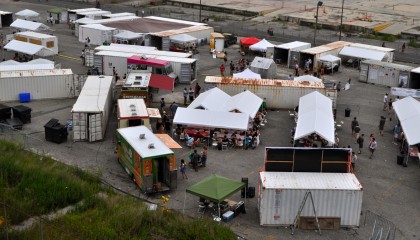
(Photos: Chuck Taylor)


Source: Brooklyn Heights Blog
http://brooklynheightsblog.com/archives/43300
From the Web

Bang! Bang! Another Weekend Of Montague Street Mayhem

June 30, 2012

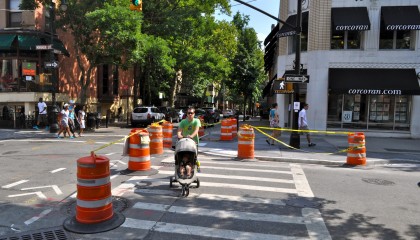
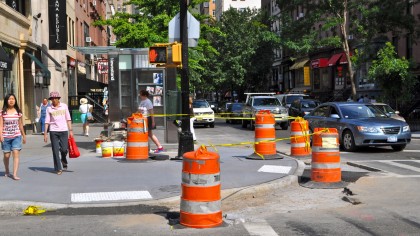
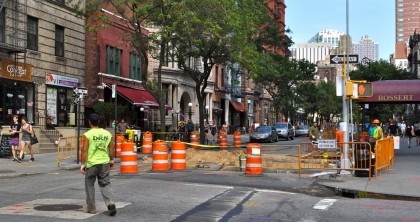
Last weekend, Montague was blocked as crews work on the street’s subterranean infrastructure. Ditto this weekend, as vehicles were re-routed from motoring down Montague between Hicks and Henry streets. The predominant construction is taking place in front of the Bossert Hotel at 97 Montague, where a peek inward reveals a cavalcade of wires, pipes and beams hearkening projects through the decades.

In addition, new sidewalks are being paved at Montague and Henry, in front of Corcoran Realty, while the opposite corner near City Chemist is being reshaped along the curb area. See photos below the jump.

(Photos: Chuck Taylor)


Source: Brooklyn Heights Blog
http://brooklynheightsblog.com/archives/43275

From the Web

Brooklyn Heights, News

Brooklyn Leads NYC Population Growth Since 2010 Census

June 30, 2012

According to the U.S. Census Bureau, New York City’s population increased from 8,175,133 in April 2010 to 8,244,910 in July 2011, up 0.85 percent over the 2010 mark. The largest change in the city’s population occurred here in Brooklyn, increasing by almost 28,000 persons or 1.12%.

That was followed by Manhattan (up 1.01%), Queens (up 0.77%), the Bronx (up 0.50%) and Staten Island (up 0.37%) over the 15 month period. NYC’s increase since April 2010 represents 80% of the total rise in New York State’s population, which, in turn, raised New York’s City’s population percentage of the state from 42.2% to 42.4%.

New York City’s growth spurt added more people than any other city in the nation for those 15 months ending July 1, 2011. Kenneth M. Johnson, a senior demographer at the University of New Hampshire, said a number of other large cities have also grown faster since 2010 than during the first decade of the century. The combination of people arriving and fewer leaving contributed to their growth. “Fewer people are moving out of the big urban cores because the recession has tended to freeze people in place,” he said.

In addition, “A number of studies have found that there’s a stronger preference for walkable neighborhoods that are close to transit and the younger population is driving less than they used to,” said Christopher Jones, VP of research for the Regional Plan Association. “All of that favors cities, and New York City in particular has become a more desirable place to live over the past 15 years because of everything from reduction of crime to improved subway service.”


Source: Brooklyn Heights Blog
http://brooklynheightsblog.com/archives/43252

From the Web

Books

Brooklyn Bugle Book Club: “The Chemistry of Tears” by Peter Carey

June 29, 2012

Image via Amazon.com

In Peter Carey’s new novel “The Chemistry of Tears” Catherine Gehrig, a horologist and conservator at the fictional Swinburne Institute in London, struggles to come to terms with the sudden death of a heart attack of her married lover, Matthew Tindall. Catherine, who is miserable, funny, and suddenly very lonely, is kept away from the funeral by her regard for the bereaved family. Matthew, whom we never see alive, only in a few emails and in Catherine’s memories, was the Head Curator of metals, and had two sons, one studying mathematics. The Head Curator of Horology, Eric Croft, was Matthew’s best friend and, Catherine discovers, knew about the affair. In order to distract Catherine from her grief, she thinks, Croft gives her a complex project to work on: restoring a mechanical duck. He also gives her something more, an assistant, Amanda Snyde.

Though she does not know the provenance of the duck, Catherine finds something in addition to its parts as she unpacks the boxes: a series of notebooks, diaries written by Henry Brandling. Brandling commissioned the duck in the mid-19th century as a distraction for his son, Percy, who was ill with tuberculosis. Brandling, who is alternately annoying and just plain silly, travels to Germany to see to the duck’s completion. Henry’s chapters alternate with Catherine’s, and, while hers are entertaining, I couldn’t wait to get to the end of his.

Catherine is tough, feisty, and funny. She is good at her job, but struggles to manage Amanda, who has a talent for drawing but becomes obsessive about the various secrets they uncover about the duck. Eric moves more and more to the background, but it is clear that there are wheels moving within wheels here, especially when it develops that Matthew’s son is Amanda’s boyfriend. Amanda begins to stalk Catherine, and breaks into her flat, and Catherine flees. In the end, the mysteries, such as they are, are resolved, and both Catherine and Amanda are able to get on with their now separated lives. Oh, and the duck which, we learn fairly early on, is actually a swan, is restored to working order. In fact, it’s a triumph: a crowd-pleasing money maker that is displayed in the Swinburne’s lobby.

I found this book to be deeply unsatisfying, the emotional crisis coming at the beginning, the manipulations becoming evident all of a sudden only at the end. Perhaps less time with Henry and more with Catherine and Amanda would have made me happier. Or am I missing something? Let me know what you think in the comments.

Have a book you want me to know about? Email me at asbowie@gmail.com. I also blog about metrics for people who hate numbers here.

From the Web

Bike Rack Proposed At Pacific & Court In Cobble Hill To Curb Illegal Parking

June 29, 2012

The Cobble Hill Association has proposed adding a bike rack at the corner at the intersection of Pacific & Court streets in Cobble Hill, in an apparent effort to curb illegal parking in a “No Standing” zone at the intersection. The move was presented to the Department of Transportation in February, according to DNAinfo.com in an ongoing effort to remedy traffic snafus in the neighborhood.

DOT offered a proposal to Brooklyn’s Community Board 2 last week, which was approved unanimously by the board’s transportation committee. The plan will be voted on by the full board at the board’s executive committee meeting next week.

Despite restrictions, drivers often park at said intersection and block the view of other drivers trying to make a left-hand turn onto Court, according to CHA VP Dave ‘Paco’ Abraham. To solve the problem, DOT and the association proposed an on-street bike rack on the corner to prevent cars from having access to park there.

Similar racks have been installed at Smith & Sacket streets in the nabe, and in the East Village, at East Ninth Street between First & Second avenues. “The bike racks are low enough that a biker or a driver can look over them,” Abraham said. “As a driver, when I drive up Pacific Street, I stop at the crosswalk to let pedestrians pass and then inch out. When a car is blocking the view, I have to inch out further and further, blocking the crosswalk. As a pedestrian, I’m always frustrated when my crosswalk is not clear because a car is blocking it.”


Source: Cobble Hill Blog
http://cobblehillblog.com/archives/7469

From the Web

Brooklyn Heights, News

Willowtowners Fear Traffic Nightmares From Fieldhouse Crowds

June 29, 2012

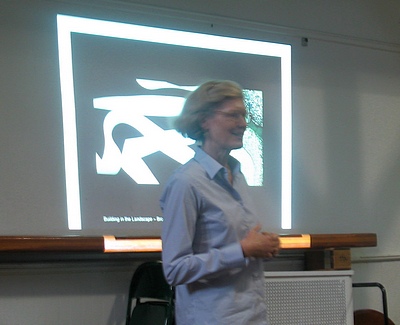
Yesterday (Wednesday) evening the Fieldhouse road show continued in Willowtown, at a meeting arranged by the Willowtown Association and hosted by their President, Ben Bankson. The opening presentation was similar to that at St. Francis on Monday, except that Fieldhouse Executive Director Greg Brooks stressed even more–no doubt anticipating the questions he knew would come–that this was a meeting to hear concerns and get information from the community, not to offer answers. Also, the design portion of the presentation was handled by Jean Phifer (photo) of Thomas Phifer and Partners, instead of Greg Smith, of that firm.

Kate Collignon, of consultant HR&A Advisors, Inc., fielded the first volley of questions. The opening question was, what is the expected daily usage of the Fieldhouse? Ms. Collignon said there is no specific expectation at present; this will have to await information from local schools and other community organizations about their needs and desires. The next question was: How, then, can projections of traffic be made for the supplemental Environmental Impact Statement without full information about usage? Joralemon Street resident Frank Ciaccio said the issue of transportation needed to be addressed first. Others quickly seconded this, some noting that Joralemon between Hicks and Furman is already overburdened with auto (especially livery cab) traffic seeking a shortcut to the BQE. There was general agreement that the best solution to this problem was to block entrance to Furman Street from Joralemon. It was suggested that this could be done with retractable bollards that could be lowered to allow passage of emergency vehicles when needed. However, this would require assent of the City’s Department of Transportation, as well, perhaps, of other agencies.

Parking was also a concern. Some residents noted that parking in Willowtown had become more difficult since the playground on Pier 6 had opened, and anticipated its being much worse with the Fieldhouse. Ms. Collignon noted that one of the ways to encourage people to use mass transit instead of cars was to provide jitney service from nearby subway stations. Mr. Ciaccio suggested opening a tunnel from the Clark Street subway platform to Furman Street, which he said could be done at minimal cost.

One resident, noting Ms. Phifer’s emphasis on the lightness of her firm’s buildings, said she had spent a winter fostering a family of abandoned dogs in the the then derelict area where the Fieldhouse is to be constructed. She said the winter time she spent there showed the site to be extremely cold and windy, and she hoped that the architects, who were proud of their “light” buildings, would design something strong enough to withstand the weather. Ms. Phifer assured her that they would.


Source: Brooklyn Heights Blog
http://brooklynheightsblog.com/archives/43232

From the Web

Food

Cobble Hill’s Battersby Fosters NYT Love

June 29, 2012

“Battersby Is Poised For The New Brooklyn.” That’s the headline in a generally flattering New York Times restaurant review for “elbow to elbow” intimate Cobble Hill eatery Battersby at 255 Smith Street and Douglass Street, owned by Joseph Ogrodnek and Walker Stern. Quote: “At its best, the food at Battersby is thoughtful, poised, occasionally revelatory.”

Regarding the restaurant’s lamb, NYT reporter Ligaya Mishan muses, “This is a biography of lamb, intimate in its details. You sense that the person who cooked it broke down the animal himself. You do not coo over such a plate; you bow your head, in grace.” The menu of about a dozen dishes changes as often as three times a week, she reports.

Recommended on the menu are the kale salad, crab parfait, quinoa with herbs and lettuces, octopus and chorizo, branzino, lamb and spontaneous tasting menu. Prices range from $7 to $29, with a tasting menu for $65-$85.

One more amusing note… Mishan suggests that Smith Street is “a formerly insalubrious strip that is now just a Marc Jacobs away from becoming Brooklyn’s Bleecker.”

(Photo: New York Times/Elizabeth Lippman)


Source: Cobble Hill Blog
http://cobblehillblog.com/archives/7461

From the Web

Real Estate

Broker David Mandrell IDs Cobble Hill As ‘Next Hottest’ Brooklyn Neighborhood

June 29, 2012

David Maundrell, founder of brokerage firm Aptsandlofts.com, was interviewed in the New York Daily News‘ Real Estate “Ask A Broker” section Thursday, about Brooklyn’s hot spots.

The residential firm recently opened a second storefront office in Cobble Hill and according to Maundrell, the “next hottest nabes in NYC” are… Cobble Hill and Bushwick, Brooklyn. He notes, “Cobble Hill because of the access to outstanding schools, parks, a host of new and exciting retail on Court Street and beautiful tree-lined landmarked streets. The lack of inventory in the townhouse market and the overflow from Brooklyn Heights is really starting to put significant pressure upward pressure on pricing.

Regarding Bushwick: It’s “on the tip of everyone’s tongue because of an exploding art scene and some well-noted restaurant reviews.”


Source: Cobble Hill Blog
http://cobblehillblog.com/archives/7456

From the Web

Brooklyn Heights

Heights History: Heights Casino, 75 Montague Street

June 28, 2012

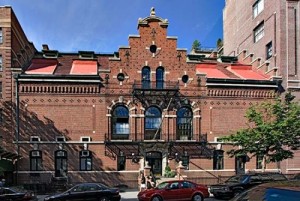
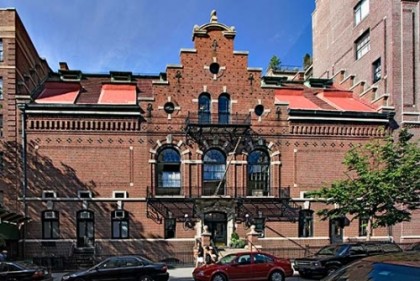
As part of its regular series “Brooklyn One Building At A Time,” Brownstoner’s Montrose Morris offers a detailed history of the Heights Casino at 75 Montague Street. The Flemish Revival building was constructed in 1905, designed to accommodate sports and club activities, as well as a reference to Brooklyn’s Dutch heritage. For its entire life, the Casino has been a “tony private club whose members had blood as blue as a yachtsman’s fine navy blazer,” Brownstoner says. It is also home to the first indoor tennis court in the nation, which can be transformed into a posh ballroom.

Historically, by the 1950s, the Casino’s restrictive policies—no Jews, no Negroes, no new money—had about driven it to bankruptcy. As with most organizations, policies evolved, leading to diversity that has kept the club alive & well today. Read more at Brownstoner here.

Bob Furman also wrote a history of clubs in the neighborhood last June for BHB. See his tasty read here.


Source: Brooklyn Heights Blog
http://brooklynheightsblog.com/archives/43195

From the Web

Brooklyn Heights

Imagine A 9,000sf Permanent Floating Pool In Brooklyn Bridge Park…

June 28, 2012

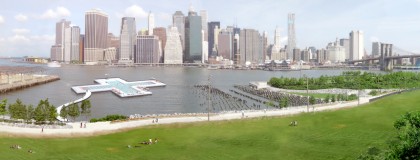
The possibility of a permanent 9,000 square foot floating pool in Brooklyn Bridge Park is being floated by a design firm that appears to be making strides amid a tenacious engineering, environmental and bureaucratic process. In an ideal world, the project, deemed “+Pool,” could become reality by Summer 2015. BHB first reported the project last June (link includes video). Mind you, this is a far cry from the 3-1/2-foot temp pool opening this summer at BBP’s Pier 2.

The +Pool would be designed as four pools in one: with children’s, sports, lap and lounge pools. Each can be used independently or combined to form an Olympic-length lap pool, or opened completely into a fully open 9,000 square foot pool.

Behind the ambitious feat are designers Dong-Ping Wong of Family Architects and Archie Lee Coates IV and Jeffrey Franklin of PlayLab. According to their website, “After we test and prove the filtration, we’ll go through the long and arduous process of getting required city and state approvals.” The project was launched with the ideal of improving use “of the city’s natural resources by providing a clean and safe way for the public to swim in New York’s waters,” they add.

Curbed reports in an interview with Dong-Ping Wong that among the challenges ahead: Traffic in the river causes waves that could move the pool around, so the team must figure out whether tethers will allow it to glide up and down. In addition, +Pool’s design filters river water through the its walls “like a giant strainer dropped into the river,” so it would remove bacteria, contaminants and odors, leaving only safe and swimmable water that meets city, state and federal standards of quality. The pool would be the first of its kind.

Permits, meanwhile, could take anywhere from six months to a year-and-a-half, while +Pool also needs additional funding from investors and the public (via Kickstarter).

(Photo: +Pool)


Source: Brooklyn Heights Blog
http://brooklynheightsblog.com/archives/43160

From the Web