Monthly Archives

February 2013

Brooklyn Heights, News

Scott Stringer Proposes Brooklyn Bridge Park—On The Other Side Of East River

February 7, 2013

Manhattan borough president Scott M. Stringer has proposed a beachfront park with kayaking, marshlands and a pedestrian bridge—on the other side of the Brooklyn Bridge—in a plan that appears to mimic many of Brooklyn Bridge Park’s amenities.

Stringer’s East River Blueway Plan, announced Thursday in his State of the Borough speech, calls for a public beach and kayaking directly beneath the Brooklyn Bridge, creation of two boat launches at Stuyvesant Cove at the ends of 20th & 23rd Streets, and installation of marshlands & sea walls in vulnerable flood zones. He also discussed a pedestrian bridge to elevate bike and pedestrian paths over F.D.R. Drive at 14th Street.

The New York Times reports today that the plan involved public meetings with community groups and consultations with seven city and state agencies. Stringer: “We want to open the waterfront from a recreation perspective, but we also want to protect our fragile waterfront by recognizing the reality of storm surges.” Stringer has already pledged $3.5 million in capital funding toward new marshlands.

Brooklyn Bridge Park opened its Boathouse at Pier 1 for kayaking and community rowing last June. Likewise, the much-heralded pop-up pool and BBP “beach” launched last summer on the Pier 2 uplands of Brooklyn Bridge Park.


Source: Brooklyn Heights Blog
http://brooklynheightsblog.com/archives/54977
From the Web

Brooklyn Heights, News

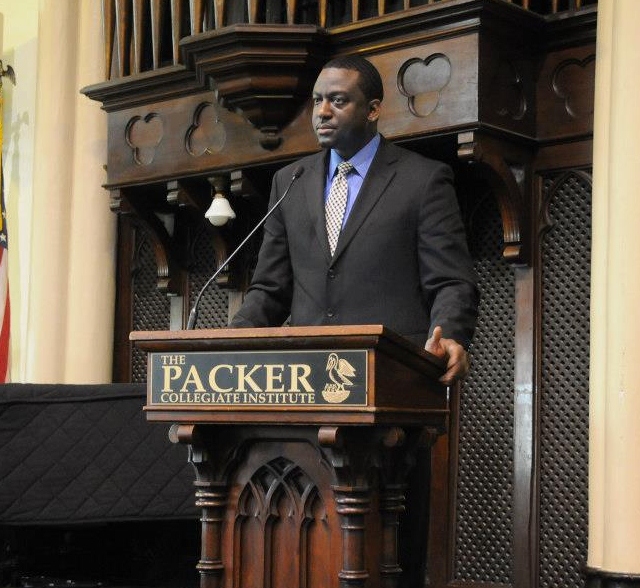
Two Members of the Central Park Five Visit Packer Collegiate

February 7, 2013

On Wednesday at the Packer Collegiate Institute, students and faculty listened raptly as two members of the Central Park Five shared their stories of being arrested, convicted, and jailed for the infamous 1989 Central Park jogger assault—a crime they didn’t commit.

Raymond Santana and Yusef Salaam spoke to members of the Packer community for two hours, explaining how they came to be arrested and convicted, and later exonerated.

The event was coordinated by Alice Lurain and Sarah Strauss, who teach chemistry and history respectively in Packer’s Upper School. Lurain teaches an elective in forensic chemistry, Strauss one in criminal justice, and last year, they began to talk about a way to offer inter-disciplinary work to their students.

“Sarah and I had spoken last spring,” said Lurain, “about getting a speaker who could talk about the use of forensic evidence, possibly in exonerations, as a way to begin our collaboration between our classes so that the students would have a more concrete understanding of why it was important to examine science and the law as fallible human institutions that can be improved if we understand their limitations.”

And at a conference last summer, Lurain found exactly the speaker she was looking for.

“I attended the American Chemical Society meeting,” said Lurain, “and there happened to be a symposium co-sponsored by the Division of Science and Law and the Innocence Project. I heard three exonerees, one of whom was Raymond Santana, speak, along with a number of forensic chemists and other people involved in law enforcement. That prompted Sarah and me to contact the Innocence Project back in August about the possibility of having Raymond visit Packer.”

The Innocence Project suggested that Salaam visit as well, a suggestion Lurain eagerly accepted.

“Raymond’s story really struck me, particularly because he was so young at the time of his arrest,” she said. “We had no idea that their case would begin to get so much press with the release of the documentary and the book.”

The film is The Central Park Five a documentary produced by Ken Burns, his daughter Sarah, and David McMahon; it  was released last fall in the United States and is currently showing at the IFC Center.

Joining Santana and Salaam was Edwin Grimsley, a case analyst at the Innocence Project, which is based in downtown Manhattan.

“Can you imagine,” Salaam began, “being at school, leaving to go hang out with your friends, doing what normal kids do, and then a portion of them don’t show up because they were kidnapped by the police department?”

A naïve teenager, he learned that the police were looking for him, and his first instinct, he said, was to go to the precinct and tell them he hadn’t done anything.

“It was a no-brainer for me,” he said. “’I’m going to tell them, and my name will be off this list.’ I came home seven years later.”

Arrested at age 15, Salaam spent five and a half years in prison and three more on parole before being exonerated in 2002.  Santana was 14 when he began his five-year term.

“One decision,” Santana told the Upper School students gathered in Packer’s chapel, “going to hang out with my classmates, some guys from the neighborhood, changed my life.” 

Both Santana and Salaam were classified as sex offenders and had to register with local precincts every time they moved.  Following their exoneration and the publication of Sarah Burns’ book on which the movie is based, the men feel that they have been able to re-claim some pieces of their lives.

“It’s awesome for people to embrace us,” said Santana. “It says how far we’ve come as a city.”

Salaam concurred. “We’ve been welcomed back, back into society.”

Neither man, though, was so generous that he’s put what happened wholly behind him. Santana still feels the sting of losing his mother to cancer while he was incarcerated and of her never knowing that he’d been exonerated.

Salaam spoke bitterly of Mayor Koch and Donald Trump. Koch was captured on camera at the time proclaiming gleefully, “We got ‘em!”, while Trump took out full-page ads in city newspapers calling for the death penalty to be reinstated so that the five convicted boys could be executed.

Despite the exoneration, the city has never publicly apologized to the Central Park Five or admitted any wrongdoing in the handling of their cases. The other men who were convicted and exonerated are Antron McCray, Kevin Richardson, and Kharey Wise.

Said Salaam, “We channel our rage into coming to schools and talking to students.”

“We love these engagements because of you guys,” Santana told the students. “Nobody wanted to invest in us, and we decided to invest in you, by telling our story.”

Disclosure: The author has taught at Packer since 1998. 


Source: Brooklyn Heights Blog
http://brooklynheightsblog.com/archives/54966

From the Web

Events

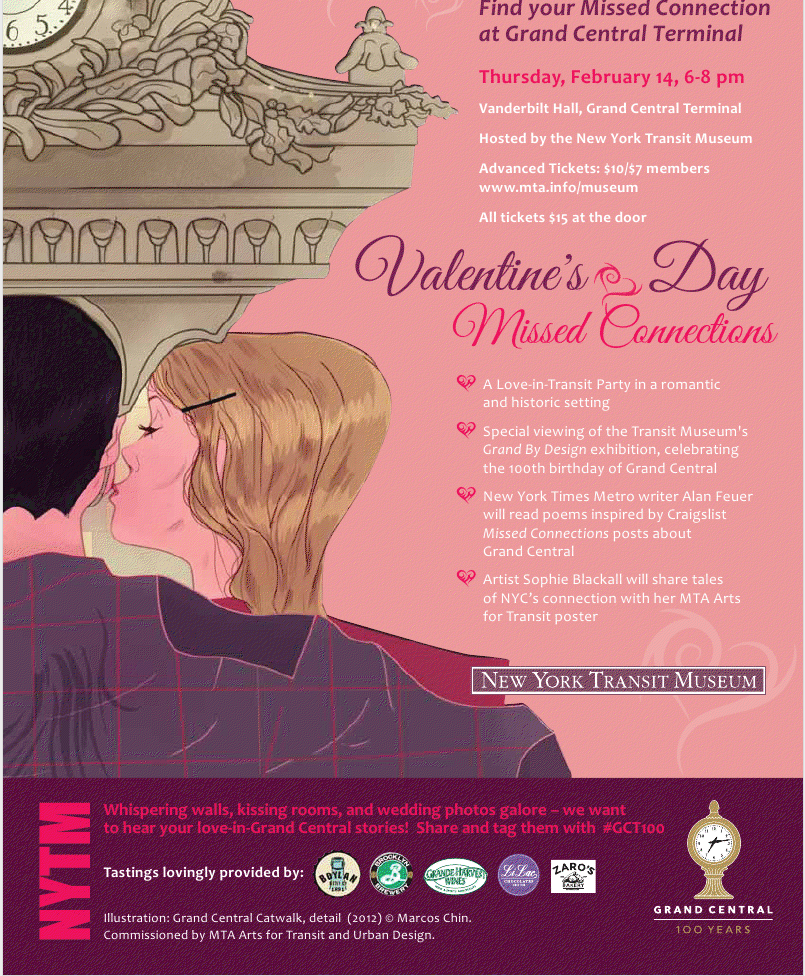
Missed Connections Party on Valentine’s Day moves to Grand Central Terminal

February 6, 2013

A week from tomorrow, on Thursday, February 14, Valentine’s Day, the Transit Museum will hold its annual Missed Connections party, this time in Vanderbilt Hall at Grand Central Terminal. Tickets are $15 at the door, $10 in advance ($7 for members). Alan Feuer, NY Times writer (“Poetic Connections”) will recite Craigslist postings as poetry, and illustrator Sophie Blackall will sign prints of her illustrations and book. There will be food and drinks.

Tickets are available here. See the Transit Museum’s website for more information. Oh, and The Transit Museum is collecting stories and photos about love-in-Grand Central at #GCT100 and www.NYTransitMuseum.tumblr.com.

From the Web

Brooklyn Heights, Food

Valentine’s Love For Atlantic Avenue’s Colonie Restaurant

February 4, 2013

In a recent round-up of romantic Valentine’s Day dinner destinations, AM New York gives some love to Colonie at 127 Atlantic Avenue.

The newspaper offers: “A true neighborhood spot, Colonie is a great place for a romantic dinner date in Brooklyn. The five-course prix-fixe dinner includes oysters with blood orange, fennel and speck consommé mignonette and chocolate ganache with banana ice cream, peanut brittle and caramel. $95 per person.”

BHB’s own Karl Junkerfeld notes, “The opening of Colonie is a transformative event for Brooklyn Heights, which can rival any restaurant in the greater New York City area. Bravo!” (Image: Karl Junkersfeld)


Source: Brooklyn Heights Blog
http://brooklynheightsblog.com/archives/54856

From the Web

Around Brooklyn, Arts and Entertainment, Podcast

Tell The Bartender Episode 2: In Hindsight

February 3, 2013

Listen to Episode 2: In Hindsight

Download from iTunes here

In This Episode:

Just Don’t Let Go Of It This Time: Molly Knefel shares with us the time she sold balloons on rollerblades for a summer job, and in hindsight, learned the meaning of life.

Thanks For The Nightmares, Jonah: Jonah Eller-Isaacs tells a spooky tale about a restless night he spent at a friend’s house. He didn’t find out why until several years later.

PLUS we feature our first original cocktail inspired by the contents of Katharine’s refrigerator: The Molly Surprise!

Molly Knefel is a comedian, performer, journalist and the co-host of Radio Dispatch with her equally talented brother, John. Here is a clip of the three of us in a car together from their hilarious web series, John and Molly Get Along:

Jonah Eller-Isaacs is an artist, writer, cancer survivor, and a tight MC. Visit his blog Groinstrong to read about his incredible journey back to health. Here is a picture of him singing live band karaoke while dressed as a zebra jockey:

zebra-jockey

Music credits:

“Setting Sun” by Chris Powers

“Bittersweet” by Chris Powers

“Bottled in Cork” by Ted Leo & The Pharmacists


Source: Tell The Bartender
http://tellthebartender.com/2013/02/03/tell-the-bartender-episode-2-in-hindsight/

From the Web

Brooklyn Heights, Celebrity Residents

Lena Dunham Develops New HBO Series, Covers EW

February 1, 2013

Lena Dunham’s empire continues to blow the lid off pop culture, as she covers the February 8, 2013 Entertainment Weekly with the headline, “How (She) Became the Voice Of A Generation.” Add that to the news that the “Girls” creator and Brooklyn Heights rez will pen a new pilot for HBO based on the upcoming memoir “All Dressed Up And Everywhere To Go,” by legendary Bergdorf Goodman personal shopper Betty Halbreich. Entertainment Weekly reports that “while there’s no word on whether show’s portrayal of the now 85-year-old Halbreich—once described as ‘part Angela Lansbury and part Lucille Ball’—will be more Golden Girls than Girls, it’s safe to assume the wardrobe will include plenty of designer labels.”

Dunham will work on the project with her “Girls” co-showrunner, Jenni Konner.


Source: Brooklyn Heights Blog
http://brooklynheightsblog.com/archives/54773

From the Web

Books

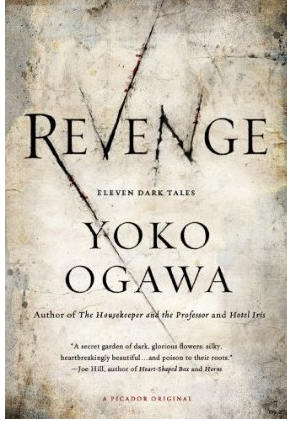
Brooklyn Bugle Book Club: “Revenge” by Yoko Ogawa

February 1, 2013

Image via Amazon.com

“Revenge,” Yoko Ogawa’s extraordinary new book of intricately, meticulously linked short stories is subtitled “Eleven Dark Tales.” The stories all take place in the same part of a city. It’s a perfectly ordinary city, with a square and a clock tower. “You could gaze at this perfect picture all day–an afternoon bathed in light and comfort–and perhaps never notice a single detail out of place, or missing.” The characters run into each other, shop in each other’s stores, live in the same apartment buildings, gossip about each other, appear and disappear. It looks like a placid, ordinary town. Except that beneath the surface lie death, destruction, murder and despair.

In one story, a woman waits all afternoon in a bakery to buy the strawberry cakes for her son’s birthday. The shopgirl talks on the phone, and weeps. It seems reasonable enough, though the woman seems ready to wait a long time. She tells another shopper why: “My son is six. He’ll always be six. He’s dead.” That’s the first of the many turns Ogawa has in store for us. In the next story we learn a bit about the shopgirl’s past, from a male friend of hers. In another story, two co-workers are sorting doctors’ lab coats, readying them for the hospital laundry. The more senior complains about her married boyfriend, Dr. Y In a third story, a bag maker goes to the hospital to visit a client. Dr. Y is being paged as the bag maker crosses the lobby. We know by now that Dr. Y is dead. Why doesn’t anyone else?

Each story has an unexpected turn, twisting but eminently plausible. Each story is narrated in the first person. Is it the same person? Sometimes the narrator is male, other times female. Who is seeking revenge? Who is not? It’s not just the people who turn up again, but things do, too: kiwis. Carrots shaped like a human hand. A Bengal tiger. A dead hamster. Strawberry cakes. A refrigerator. The details shift in every story. Every time an object reappears its shape and its meaning have changed. Each character’s role, and perspective, shifts slightly from story to story, as if Ogawa is turning her characters in a kaleidoscope. And with every turn, the previous story looks different.

The prose, translated from the Japanese by Stephen Snyder, is limpid and simple. You inhabit the spaces around the big central square with the characters, walking down the streets and listening to the clock in the tower strike the hours. You go to fancy restaurants and fast food ones; you are in a train listening to a group of children sing Brahms, and at the zoo, eating ice cream on a cold day. It’s an immense achievement, one beautifully written story after the next. And the book stays with you as you think through the connections. It’s not scary, though it is penetrating.

It’s one of my favorite books of the past year. What do you think? Let us know in the comments.

Have a book you want me to know about? Email me at asbowie@gmail.com. I also blog about metrics here.

From the Web