
Monthly Archives

May 2013

Brooklyn Heights

Actor Sean Penn Testifies For Release Of Imprisoned Brooklyn Heights Man

May 21, 2013

Actor & activist Sean Penn testified Monday before a U.S. House Foreign Affairs subcommittee that a Brooklyn Heights businessman being held in Bolivia is a “Dead Man Walking.” Jacob Ostreicher, 54, has been held without charge for nearly two years in the South American country and remains under house arrest even though 13 of his accusers are now in prison, according to today’s New York Daily News.

Penn—who won an Oscar for his role in the film “Dead Man Walking”—told lawmakers that Ostreicher is in danger because Bolivian enemies want to kill him: “I believe Jacob’s life is in danger as we sit here today.” Further, Penn testified Monday that the detainee told him, “These (expletives) want to kill me. I’m too dangerous to them as a witness.”

See Facebook page: Free Jacob Ostreicher

Ostreicher was initially arrested on suspicion of money laundering and spent 18 months in a Palmasola prison. Penn has been pushing for Ostreicher’s release and persuaded Bolivia’s leftist president, Evo Morales, to move the businessman out of prison and arrest the officials who put him there, the News says. But he remains behind bars.

Penn adds that those who imprisoned Ostreicher have made off with $27 million in assets from his company. He suggests the U.S. government should intervene: “We’re at a point where we don’t want to look back and say, ‘We should have.’” (Photo: Facebook)


Source: Brooklyn Heights Blog
http://brooklynheightsblog.com/archives/59169

From the Web

Brooklyn Heights, Celebrity Residents, Music

Adam Yauch To Be Honored At 2013 Brooklyn Hip-Hop Festival

May 19, 2013

Following May 3rd’s ceremony in Brooklyn Heights dedicating the newly named Adam Yauch Park in honor of the late Beastie Boy, the childhood Heights’ resident will now be acknowledged with a special tribute at the 2013 Brooklyn Hip-Hop Festival. Yauch, a.k.a. MCA, lost his battle with cancer in May 2012, at age 47.

Wes Jackson, executive director of the Brooklyn Hip-Hop Festival, tells ABC News, “We reached out to (bandmate) Ad Rock right after MCA passed last year and asked if there was anything we could do to help celebrate the life of his brother. It was so soon that we were hesitant to even reach out. We wanted to give them space and time.”

But now, Jackson says, “We couldn’t go another year without taking time out to honor what MCA did for our culture and our music.” Included in the tribute will be a moment of silence in Yauch’s memory.

The ninth annual festival, July 10-13 around the borough, will feature headline sets from Redman, EPMD and Pusha T. Established in 2005, it is designed to showcase “the positive aspects of hip-hop culture by highlighting its legacy as an agent of artistic progression, community building and social change,” according to the festival website. In addition to musical performances, it offers panel discussions, exhibitions, parties, an awards show and a family-friendly block party.

The festival kicks off July 10 with its Bodega Education Initiative (BEI), a political forum at The Brooklyn Historical Society in Brooklyn Heights.


Source: Brooklyn Heights Blog
http://brooklynheightsblog.com/archives/59034

From the Web

News

Open Thread: Brooklyn’s Front Page May 2013

May 19, 2013

Check out the headlines on Brooklyn’s Front Page and discuss them here. Have a link or news tip? Comment below or tweet us – @brooklynbugle .

From the Web

Books

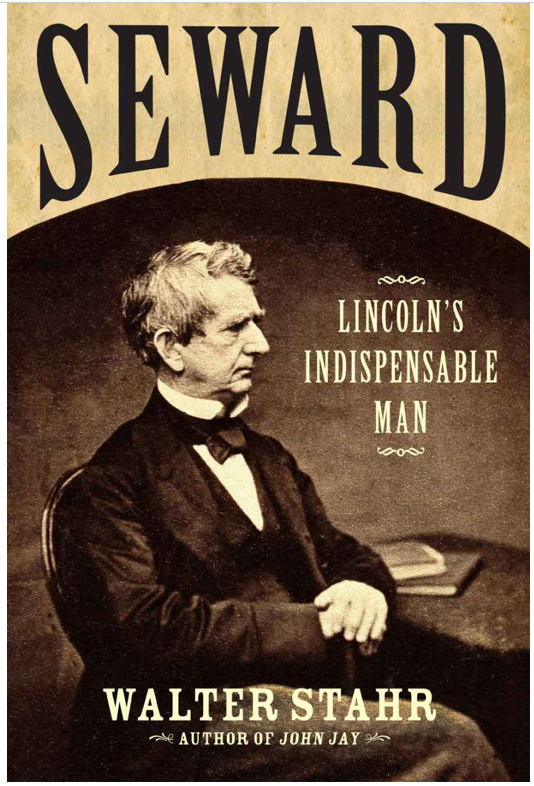
Brooklyn Bugle Book Club: “Seward: Lincoln’s Indispensable Man” by Walter Stahr

May 17, 2013

Image via Amazon.com

William Henry Seward is one of those people we think we know about – wasn’t he the cabinet member who closed Lincoln’s eyes saying “Now he belongs to the ages?” Nope, that was Edwin Stanton, Secretary of War. Seward had been in a carriage accident a week earlier; he was home in bed with a broken arm and a broken jaw, where he was also the victim of an assassination attempt. His most notable accomplishment, the purchase of Alaska, was derided at the time as “Seward’s folly.” Wrong again – that canard didn’t arise until nearly 10 years after the purchase was completed, and five years after Seward’s death. He and Lincoln were a matched pair, tall and skinny (after all, David Strathairn played him in the 2012 movie) and taciturn – wrong, wrong, wrong. Seward was small, but his personality was large, and as Walter Stahr describes Seward in his new biography, he sounds like very good company.

Seward was born in the small upstate New York town of Florida in 1801. Unusually for the time, he attended college – Union College, in Albany. He dropped out in the middle of his final semester, in 1819, and went with a friend to Georgia, where he helped found a school. Seward stayed in Georgia only a few months before returning to New York. Seward’s 1819-1820 visit coincided with the national debate about slavery that culminated in the Missouri Compromise. Since the visit to Georgia was Seward’s longest stay in a slave state, and Stahr notes that in 1866 Seward received a letter from a former slave claiming to be his daughter, I would have liked to know more about how this experience might have affected Seward’s later thinking. But to his credit Stahr never ventures far from the documentary evidence. An unfortunate result is that he never mentions Seward’s Georgia stay again.

Seward settled in Auburn, New York, where he married Frances Miller and practiced law. It was only a short time before Seward moved into politics. He became a New York state senator, and soon was a candidate for governor. He lost his first bid, and instead became a land agent, managing a vast tract of land in Chautauqua County. He was elected governor on a second try, in 1838. Eventually he became a senator and Secretary of State in Lincoln’s cabinet. Seward always thought about the big picture: he was influential in developing the transportation mechanisms – first canals and then the railways – that helped New York and the country to become manufacturing and economic centers.

All the political involvement kept Seward away from home much of the time. Although Stahr describes the marriage as difficult – Frances did not like spending time in Washington – it also appears to have been a devoted one. Frances was intelligent and well-read, and argued with her husband about slavery: she was an abolitionist. Seward was deeply opposed to slavery but was not an abolitionist, believing before the Civil War that slavery would eventually die a natural death.

Seward was a consummate politician, one from whom Lincoln, no slouch in that department, could – and did – learn from. To take just one example, Stahr’s description of the complex events leading up to the issuing of the Emancipation Proclamation is clear and convincing. In Stahr’s reading Seward initially opposed the Emancipation Proclamation and thought it should be delayed. Seward used the time between Lincoln’s initial suggestion to his cabinet to find out how European allies would react – and when it became clear the reaction would be positive and that Lincoln was going to issue the document Seward suggested revisions that strengthened the document.

This biography leaves the impression of Seward as an imaginative statesman who envisioned the US as a world power, and lay down the groundwork for it: Alaska wasn’t the only territory whose purchase he engineered. The Virgin Islands, Midway Island, the isthmus of Panama, Hawaii – Seward was looking at all of them for offshore ports. Even more importantly, he kept the US out of several possible wars with European powers during the Civil War. He worked well and closely with Lincoln throughout the war, on both foreign and domestic policy. As Stahr describes him:

Many people helped to ensure that the Union emerged from the Civil War as one nation, rather than splitting into two or more rival nations, but it is hard to name a single northern civilian other than Lincoln who contributed more than Seward.

Do you agree? Let us know what you think in the comments.

Have a book you want me to know about? Email me at asbowie@gmail.com. I also blog about metrics here.

From the Web

Events, Food

Brooklyn Bridge Park’s “Sunset Ohana” is Thursday Evening, June 6

May 17, 2013

The Brooklyn Bridge Park Conservancy is having “Sunset Ohana,” its 14th annual (which seems to go back to when the Park was still a gleam in some local citizens’ eyes) sunset party at Pier 1 on Thursday, June 6 from 6:00 to 9:00 p.m. This year the theme is Hawaiian.

Our little slice of Hawaii on the Brooklyn waterfront will include authentic Hawaiian steel guitars and classic surf music, tasty island treats, luau lawn games, a tropical specialty cocktail, hula sessions, and much more. Be sure to wear your most colorful shirt!

Among the “tasty island treats” will be “spam sliders with green papaya slaw.” Can’t wait! (I’m not kidding.)

More info here and buy tix here. Come and get lei’d!


Source: Brooklyn Heights Blog
http://brooklynheightsblog.com/archives/58977

From the Web

Around Brooklyn

Tell The Bartender Episode 9: Last Days and the Preponderant Shaft Project

May 15, 2013

Listen to Episode 9: Last Days and the Preponderant Shaft Project

Download From iTunes Here

In This Episode:

Last Days: Stephanie D’Abruzzo has an interesting history with last days on the job. She shares with us two short stories about her last day at the Broadway show Avenue Q, and her last day working at a Burger King in college.

The Preponderant Shaft Project: In 2008 a group of friends took an inside joke on an email thread a little too far. In Katharine’s first ever field piece, we hear from Ed Winnick, Chris Powers, Michael Boyd, Jon Quinn and Brett Gustafson about what inspired them to create a full length album worth of songs in a few weeks… over a private email conversation inspired by a spam message. For the first time, we hear the fruits of their creative labor.

PLUS Katharine shares a new drink recipe, and we play a new round of everyone’s favorite game, “Craigslist Ad or Casting Notice?”

In related news, “Last Days and the Preponderant Shaft Project” is the name of Katharine’s new jam band.

Stephanie D’Abruzzo is a Tony nominated actor, an original cast member of Broadway’s Avenue Q, puppeteer, writer and an all around awesome person. She was also the voice of Uma on Oobi, Katharine’s favorite kids show ever to watch as an adult. Here she is looking just darling:

DAbruzzo_Stephanie_55_ret

Ed Winnick, Chris Powers, Michael Boyd, Jon Quinn and Brett Gustafson are a group of friends who have separately, and together, played in various bands such as 76% Uncertain (Ed), Onion (Ed), Shrieking Void of Emptiness (Ed and Brett), Gunk (Ed and Brett), Tide (Chris and Michael), Klimpter (Ed, Brett, Michael and Jon) and Firenza (Chris and Michael).

Listen to the full songs from the Preponderant Shaft Project here:

1. My Shaft is Extremely Preponderant – the Guided By Voices version by Chris Powers

2. Shafterpol – the Interpol version by Michael Boyd

3. 80′s Shaft – the 80′s take on the Shaft song by Jon Quinn

4. 60′s Shaft – the 60′s take by Chris Powers

5. Shaft Gordon – a play on the Flash Gordon song by Jon Quinn

6. Meta Shaft – inspired by the Isaac Hayes song of the same name by Michael Boyd

7. Shaftira – the Shakira version by Katharine Heller (featuring a voicemail accidentally recorded on Jon Quinn’s phone)

8. Shaft The Musical – the Broadway Musical version by Jon Quinn and Katharine Heller

9. My Thrash is Extremely Preponderant – the Heavy Metal version by Brett Gustafson


Source: Tell The Bartender
http://tellthebartender.com/2013/05/15/tell-the-bartender-episode-9-last-days-and-the-preponderant-shaft-project/

From the Web

Brooklyn Heights, Celebrity Residents

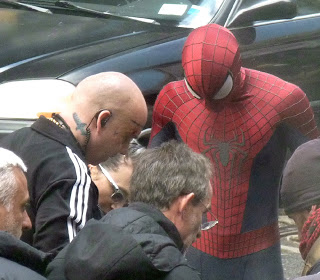
Brooklyn Heights Resident Paul Giamatti Filming ‘Amazing Spider-Man 2′ In DUMBO

May 14, 2013

“The Amazing Spider-Man 2″ is filming in DUMBO this week, as the neighborhood was taken over by police cars, the “Midtown bus,” crowds of extras and all sorts of whacko action.

McBrooklyn offers pics, including lead Andrew Garfield—and Brooklyn Heights’ own Paul Giamatti, who plays villain “The Rhino.” In the film, his alter ego is Russian thug Aleksei Sytsevich, complete with tattoos on his neck and forehead.

RELATED: Spiderman Shoots In DUMBO [VIDEO]

Also in the flick: Emma Stone as Gwen Stacy, Jamie Foxx as Electro and Sally Field as Aunt Mary. (Photo: MK Metz)


Source: Brooklyn Heights Blog
http://brooklynheightsblog.com/archives/58906

From the Web

945204_10151394873395866_2048271732_n
Arts and Entertainment, DUMBO

The Amazing Spiderman Films In DUMBO [Photos and VIDEO]

May 12, 2013

Brooklyn Bugle pal/ King of All MashStudio NYC Darryl Ohrt (@darrylohrt) has posted some nifty video and pics of this weekend’s Spiderman film shoot in DUMBO.

The next Amazing Spiderman will be in theaters next year, but DUMBO got a sneak peek of star Andrew Garfield (or is that a stuntman?) in full Spidey regalia.

From the Web

Arts and Entertainment

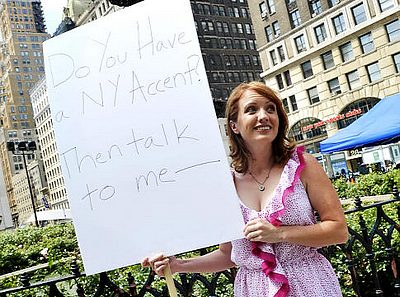
NYT Times Covers Heather Quinlan’s NY Accent Movie

May 11, 2013

The juggernaut that is BHB contributor Heather Quinlan’s If These Knishes Could Talk gains more steam with coverage in the New York Times. Last year BHB and its readers along with the Brooklyn Heights Cinema gave audiences a sneak peek of an early version of the film as well as providing donations for its completion.

The doc, featuring the soon-to-be totally famous Ben Lee (aka Asian Guido), makes it’s official debut at the Art of Brooklyn Film Festival this Thursday:

NYT: This is one of the inferences to be drawn from “If These Knishes Could Talk: The Story of the New York Accent,” a film in some sense betrayed by its title, because its purpose is to show how multifarious (and mutable) the New York accent actually is. A documentary by a native New Yorker named Heather Quinlan, the film, having its premiere at the Art of Brooklyn Film Festival on Thursday, examines the way that different immigrant groups adapted to speaking in the city, and illuminates the distinctions that were the result. The Jewish accent (Woody Allen) is syntactically different from the Italian accent (“The Godfather”). And, in turn, both are different from the Irish accent, which Ms. Quinlan believes was best illustrated — in popular entertainment — in “All in the Family” (“goil,” for girl, “terlet” for toilet), and has largely vanished.


Source: Brooklyn Heights Blog
http://brooklynheightsblog.com/archives/58821

From the Web

Books

Brooklyn Bugle Book Club: “People Who Eat Darkness,” by Richard Lloyd Parry

May 10, 2013

Japan is a country of great natural beauty, singular art, and an unending source of interest to many Westerners. But life there is very different from life in western cultures. “People Who Eat Darkness,” a compelling true story of crime, investigation, and punishment in Japan – and the concomitant grief and loss in the United Kingdom – underlines the significant differences in the criminal justice systems.

Lucie Blackman left school after completing her A levels. Instead of going to university she worked, first in a bank, and then as a British Airways flight attendant. She was tall, blonde, and meticulously well-groomed, but she was in debt. When a friend told her that she could make money easily, working in Japan as a hostess in a club catering to Japanese salarymen, she decided to go. After two months in Japan she disappeared.

Her father and sister went to look for her, and Lloyd Parry, the Tokyo Bureau Chief of The Times of London, was taken with Lucie’s story. And that of several other young Western women who had come forward with a story of waking up naked and ill after going out for a drink with a man. In the US, if someone were to come forward with that kind of story, the police would actively investigate – in fact, there’s a similar story being reported as I write. In Japan, the police seemed to ignore the reports. In 2000, though, Tony Blair, then the British Prime Minister, was in Tokyo for a summit meeting with the Japanese Prime Minister. The Blackmans were able to reach him; Blair’s public statements put pressure on the Japanese to increase their efforts to find Lucie.

Who were these young women? Who were the men they dated? And what is the culture that encourages the development of clubs where women are paid to converse with, and feign interest in, the male customers? Lloyd Parry does an excellent job describing the different paths that bring people to the clubs, the subtle distinctions between hostessing, topless dancing, and prostitution, and the appeal of the clubs to both sides in the transaction.

This is not just the story of a young woman’s disappearance, and the subsequent investigation, arrest and prosecution. It’s also an extended meditation on how we behave in public. For the Blackmans, there was a choice: hold press conferences and generally use the media to enlist the public’s help, or stay private, and work closely with the police. Either choice has risks and benefits, and Lloyd Parry shows how the consequences of the Blackmans’ choice were magnified by the cultural divide. Even on our side, there are expectations for behavior, and Lucie’s father, Tim, did not always follow them.

It’s in Lloyd Parry’s explorations of those expectations, and the real-life impact of tragedy on a family, that this exceptionally well-written book is the most sensitive and interesting. Lloyd Parry knows how to tell a story. In “People Who Eat Darkness” he also demonstrates the an unusual ability to find meaning behind the events he relates. Do you agree? Let us know in the comments.

Have a book you want me to know about? Email me at asbowie@gmail.com. I also blog about metrics here.

From the Web