
Monthly Archives

May 2013

Arts and Entertainment

Brooklyn Bridge Park Has Second Annual Bluebell Photo Contest

May 9, 2013

The Spanish bluebells (Hyacinthoides hispanica), of which there are many on Piers 1 and 6, Brooklyn Bridge Park, are beginning to bloom (see maps for locations here). So, just like last year, BBP is having a contest for the best bluebell photos. Contest details are here.


Source: Brooklyn Heights Blog
http://brooklynheightsblog.com/archives/58801
From the Web

Arts and Entertainment, Books, History

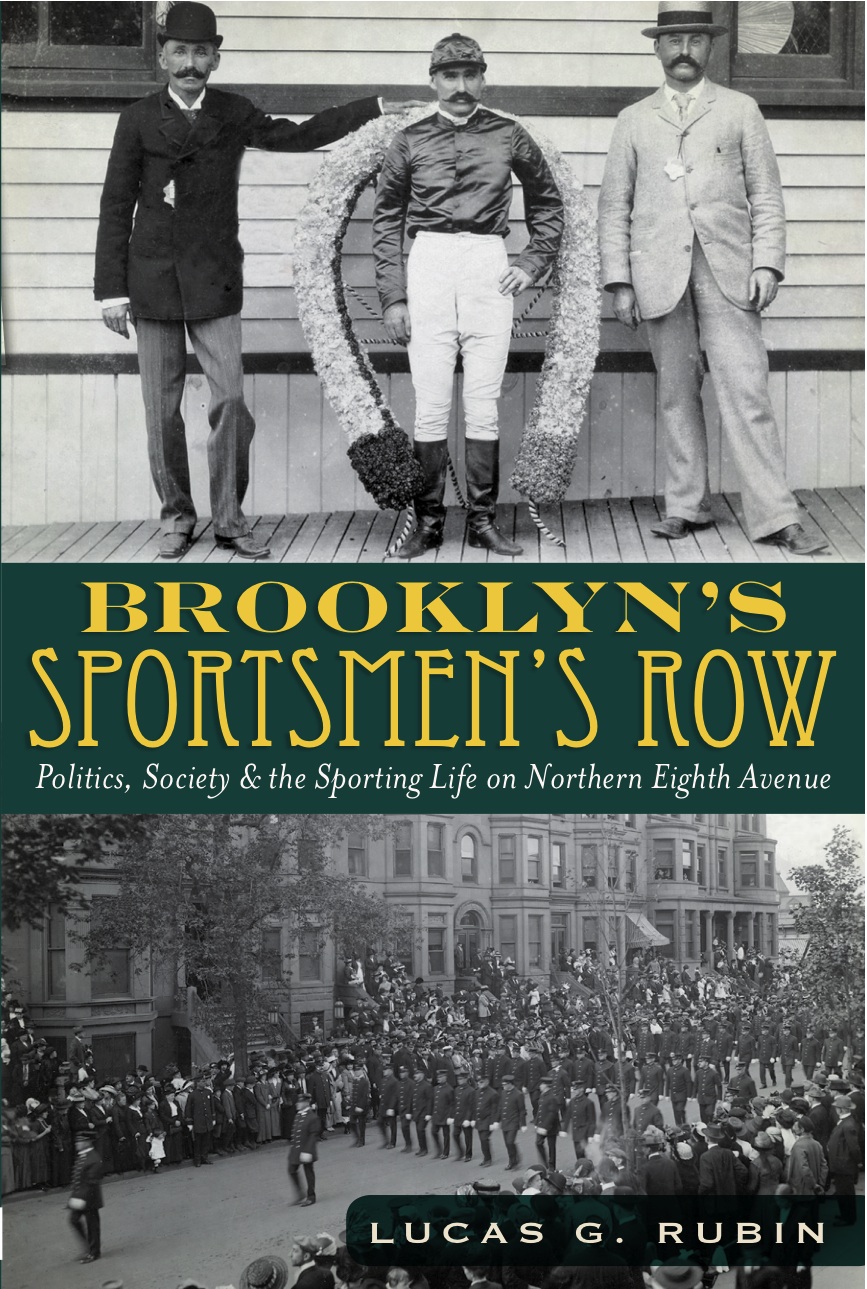
History, Horse Racing, & Politics On Brooklyn’s Sportsmen’s Row

May 8, 2013

An archaeologist by training, Lucas Rubin has spent a good deal of his life immersed in the past. He also loves cities, and he loves sports. In his book, Brooklyn’s Sportsmen’s Row: Politics, Society & the Sporting Life on Northern Eighth Avenue, he indulges his passion for all three.

Rubin earned an M.A. and a Ph.D. in classic archaeology with a concentration in urban topography from the University of Buffalo, going on to work at the Brooklyn Museum as an assistant to the director, and he’s held a variety of positions at Columbia University, currently directing the Master of Science Program in Sports Management at Columbia University.

A Brooklyn native, he’s lived for much of his life in Park Slope, most recently on Eighth Avenue, in the home he and his parents purchased in the late 90’s, a vintage Brooklyn brownstone at the northern end of the avenue.

“One day,” Rubin said, “my father made a passing, cryptic comment to me – ‘We finally made it to Sportsmen’s Row.’  I thought to myself, ‘Maybe one day I’ll look into that.’”

It was no idle thought, and last year, the History Press published Rubin’s book, the history of the block that in the 1890’s was home to some of Brooklyn’s brightest sporting luminaries, at a time when the city of Brooklyn, then the borough, was home to three race tracks, at Brighton Beach, Gravesend, and Sheepshead Bay.

The first owner of Rubin’s house was James G. Rowe, Sr., a famous jockey and Thoroughbred horse trainer who was elected to Thoroughbred racing’s Hall of Fame in its inaugural 1955 class; the block also attracted other trainers, jockeys, and horse owners.  Some of its more celebrated residents were the Dwyer brothers, butchers who had a shop at the corner of Court St. and Atlantic Avenue before dominating the racing world as owners.

Other residents of Sportsmen’s Row included men well-known in politics, the arts, business, and law, among them William James Gaynor, mayor of New York City from 1910 to 1913.

Rubin made extensive use of Brooklyn resources in researching his book, finding particularly valuable the collection and librarians at the Brooklyn Historical Society.

“I love what I do, but I love the BHS,” he said. “Working for them would probably be the only other job I’d consider.”

He also used the resources of Green-Wood Cemetery, itself a National Historic Landmark and the location of the burial sites of several of the sportsmen about whom he writes in the book.

This Sunday, Rubin will speak at Green-Wood on “Life and Death Along Sportsmen’s Row: Brooklyn’s Eighth Avenue and Green-Wood,” looking at both the famous and the not-so-famous people he writes about, followed by a trolley tour of some of the cemetery’s sites.

Among those whom Rubin is certain to mention is Edward “Snapper” Garrison, a Hall of Fame jockey who rode from 1882 to 1897 and who lived at 30 Eighth Avenue until about 1897.  In addition to their geographical kinship, Rubin discovered something else he and Garrison have in common: their birthdays. Both were born on February 9.

Rubin’s book is available at The Community Bookstore in Park Slope and from Amazon.  The Green-Wood talk starts at 1:00 and is free; the accompanying trolley tour costs $10 for members of the Green-Wood Historic Fund and $15 for non-members. Space is limited and reservations are recommended.


From the Web

Around Brooklyn

Tell The Bartender Episode 8: Oops

May 8, 2013

Listen to Episode 8: Oops

Download From iTunes Here

In This Episode:

Horse Power: A few years ago Micaela Walker’s car got hit by a reckless teenage driver. Since this took place in Amish Country, it also happens that the teenager was speeding in a horse and buggy.

The Time Of Your Life: Steve Reynolds tells us about one night with Green Day, his blood, and Winona Ryder.

Oopsie Baby: When Mike Rose’s wife went into labor, he assumed the midwife would get to their home before the baby did. He was wrong.

PLUS Katharine shares a classic drink recipes and gives personal shout-outs to subscribers and supporters, and a new round of everyone’s favorite game, “Craigslist Ad or Casting Notice?” Also, Katharine was a guest on the amazing comedy podcast, Keith and the Girl last week. Hear her tell her favorite bartending stories on their show here!

Micaela Walker is a Brooklyn based photographer, writer and very safe driver. Here is a picture of the incident:

© Micaela Walker

© Micaela Walker

Steve Reynolds is a DJ (founder of the popular 90s event Party Like It’s 1999), an MC (for Bunnie England and the New Originals, New York’s loudest live karaoke band) a music journalist and co-editor of the new book Fan Interference: A Collection of Baseball Rants and Reflections, due out June 18th on Blue Cubicle Press. Here is the photo from the story he told with his blood on the stage:

IMG_2321

Mike Rose is an editor at The Unofficial Apple Weblog TUAW.com, and the regular host of the site’s live Sunday night podcast, talking about all things Mac, iPhone and more. You can find him on Twitter @MikeTRose and at his personal site, geekparent.com. Here is a picture of his family the night this story happened:

family

Music Credits:

“Setting Sun” by Chris Powers

“Bottled in Cork” by Ted Leo & The Pharmacists


Source: Tell The Bartender
http://tellthebartender.com/2013/05/01/tell-the-bartender-episode-8-oops/

From the Web

Police Blotter

84th Precinct Police Blotter – 5/8/13

May 8, 2013


The days are getting longer but the perps are getting brazen-er. It’s this week’s blotter.

I had to get to the precinct a bit later yesterday but was greeted with a much more relaxed 84–maybe because of the weather, maybe because it was almost lunchtime. Because it certainly wasn’t due to the lack of crime going on, there was a stack of reports to get through. Starting with …

Another sleepy straphanger got snookered. (Alright, maybe “snookered” isn’t precisely correct, but it sounds good.) Translation: a 33-year-old woman fell asleep at the 53rd St R station, and when she awoke at Atlantic, her $1,100 MacBook Pro was gone.

An ATM at 3 in 1 Fast Food on Hoyt Street was destroyed early in the morning on April 29th. Pieces were strewn about the sidewalk, and $7,200 was stolen. Interestingly, this was the same place that an ATM was torn open with help from an SUV a couple weeks earlier. By the way, here are the Yelp reviews for 3 in 1, aside from a new ATM, apparently they need some help in customer service.

Last Tuesday, a 50-year-old woman left her pocketbook–with $9,000 inside–in a drawer at her home office on Bond Street. At some point one of the people with access to her apartment, including a housekeeper and babysitter, found the bag and stole the money. Though whether it was out of fear, guilt, or some other emotion, he or she took $7,500 instead of the entire amount.

Last Sunday, a 29-year-old man spit on a 39-year-old man at Brooklyn Criminal Court, and claimed he was HIV-positive. The man was arrested for assault.

There were several incidents of broad-daylight muggings: Last Saturday afternoon at the Fulton Mall, a 28-year-old man was jumped by three men who stole his Air Jordan 5s.

On Wednesday, a 36-year-old woman was on Dean Street walking toward Smith when a man grabbed her iPhone and disappeared on Hoyt.

The next morning, a bag was stolen from a 33-year-old man who was sitting on a bench at 360 Adams Street.

Last Tuesday at 2 p.m., a 59-year-old teacher at PS 307 went to an 8 am staff meeting; if that wasn’t bad enough, the bag she’d left in her desk was stolen.

That same day at 2pm at the 7 Old Fulton Street restaurant, a 19-year-old girl put her $750 bag down to chat with some friends, only to discover 10 minutes later that it was gone, along with a $2,000 MacBook Pro and $830 Canon Camera. And yikes, here are the Yelp reviews for this restaurant, they’re as bad as 3 in 1 Fast Food.

An hour earlier, a 27-year-old man was mugged on Sidney and Joralemon by someone believed to have a knife. The thief made off with $400.

At 4:45 pm that same day, a 15-year-old was approached by four males at Concordia Park who shoved him to the ground and stole his $375 transitional lenses. A bespectacled police officer and I were discussing what “transitional lenses” were. “Why transitional? He should have gone for the real thing,” he said. He then let me know he’s going for lasik surgery, he’d heard great reviews about it.

And finally, on Thursday at 1pm, a man outside 49 Duffield Street was pushed to the ground by a perp who stole his bike. And then his eyeglasses. And that’s this week’s blotter.


Source: Brooklyn Heights Blog
http://brooklynheightsblog.com/archives/58739

From the Web

Arts and Entertainment, Events, Music

Dance Parties at Brooklyn Bridge Park Start Thursday With New Orleans Funk

May 7, 2013

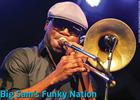
BRIC Arts Media and the Brooklyn Bridge Park Conservancy are co-sponsoring a series of three Celebrate Brooklyn! dance parties on Pier 1 the next three Thursday evenings, starting at 7:00 p.m. This Thursday, May 9, the featured act is New Orleans’ Big Sam’s Funky Nation (photo). The NYC Freedom’s DJs will warm things up. Next Thursday, May 16, is an Afro-Cuban dance party with Pedrito Martinez and DJ Nickodemus. The final party, on May 23, is an Old School & Hip-Hop extravaganza with Zapp Band and D-Nice. More details here.


Source: Brooklyn Heights Blog
http://brooklynheightsblog.com/archives/58733

From the Web

Books

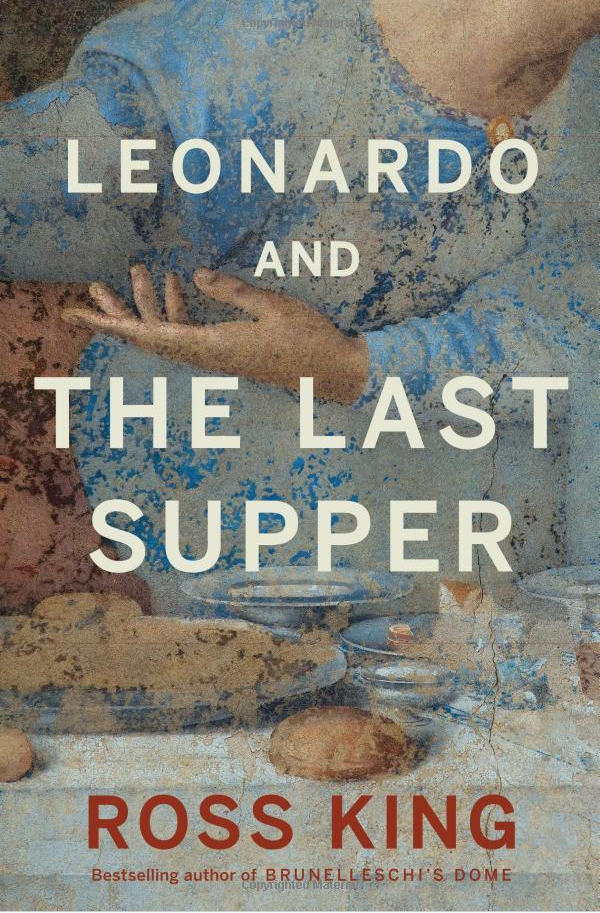
Brooklyn Bugle Book Club: “Leonardo and the Last Supper” by Ross King

May 3, 2013

Image via Amazon.com

Leonardo da Vinci’s rendering of the Last Supper on the wall of the refectory of the convent of Santa Maria delle Grazie in Milan must be one of the most venerated paintings in history. Goethe wrote about seeing it, Andy Warhol reproduced it, and countless other artists have made copies. The “Da Vinci Code” increased its popularity. Now you have to have a ticket to see it – and can stay for only 15 minutes.

How did this celebrated picture come about? Ross King’s well-written new book sets out to explain the painting in its political, governmental and religious contexts, along with its place in Leonardo’s life. King starts by describing Lodovico Sforza, the Duke of Milan who commissioned Leonardo, newly arrived from Florence, to paint the scene. Subsequent chapters include a capsule biography of Leonardo, an explanation of the subtle differences among the Gospels as they tell the story of the Last Supper, and descriptions of the shifting alliances behind the incursions into Italy of Maximilian, the Holy Roman Emperor, the King of France Louis XII, and the Duc d’Orléans.

And that’s just the start. Each chapter provides a jumping off point for King to explore relevant matters. A mid-book chapter called “Secret Recipes” starts by describing the mechanics of frescoing: construction of the scaffolding (the painting starts eight feet above the floor), and the the layers of plastering. (King includes Leonardo’s notes on the content of the plaster.) The section concludes with a brief description of how frescoists worked. Frescoists, that is, but not Leonardo, who wanted to work in oils. Hence the next section is all about paint: oil paint, how it was made, and the history of its use. Then it’s back to the underpaint on the wall – Leonardo used a white lead, and King does a good job of explaining Leonardo’s subtle and perceptive use of color. The last two sections of the chapter tie the themes together, as they are about the heraldic shields Leonardo painted above the Last Supper, and Leonardo’s use of assistants.

Succeeding chapters are equally multi-layered and fascinating. I found the chapter about Judas, with its discussion of ambiguous renderings of the various apostles in the painting, compelling. And so was the chapter called “Food and Drink,” which explains the sacramental elements in the painting but also the food and wine. I had no idea, for example, that the dish in front of Jesus held eels prepared with oranges. Or that Judas is shown just as he is knocking over a salt cellar. The painting is allusive and subtle, and King brings out as much meaning as he can.

I have two minor complaints about this book. One is that King spends too many pages unnecessarily debunking the notions put forth in “The Da Vinci Code.” The other, and this is not entirely King’s fault as the painting is in such poor shape, is that the illustrations are too few and too small. But most of them are available on the web, here and here, for example.

What’s your favorite image from this interesting book? Let us know in the comments.

Have a book you want me to know about? Email me at asbowie@gmail.com. I also blog about metrics here.

From the Web